
A Middlesex County jury has returned a $1,245,000 judgment in a New Jersey medical malpractice wrongful death case involving a 58-year-old father whose death followed a delayed surgical response to a large bowel obstruction. The defense never made a settlement offer, maintaining throughout litigation that this was a "no-pay" case. The jury disagreed, voting 7-1 on liability and 8-0 on damages.
Case at a Glance
- Final Judgment: ~$1,245,000 (including pre-judgment interest)
- Gross Verdict: $1,312,500
- Scafidi Reduction: 20%
- Case Type: Medical Malpractice / Wrongful Death
- Court: Middlesex County Superior Court, New Jersey
- Judge: Hon. Patrick Bradshaw
- Jury Vote: 7-1 liability / 8-0 damages
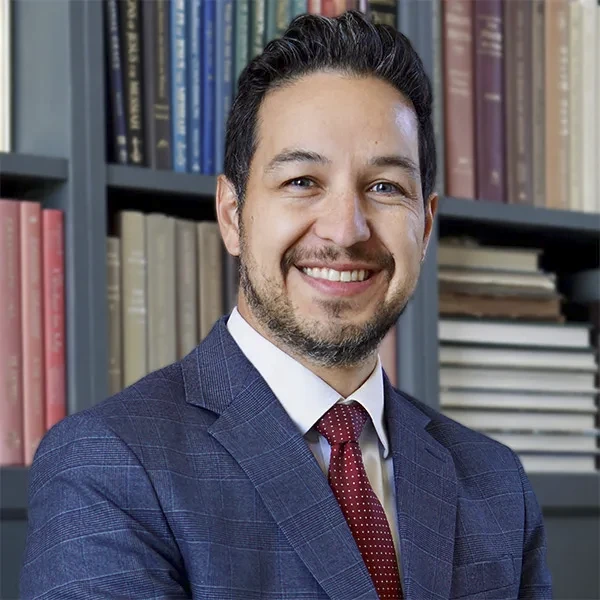
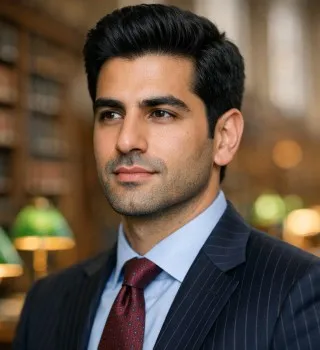
- Plaintiff Attorneys: Amos Gern (partner) and John T. Brost (associate), Sarno da Costa D'Aniello Maceri Webb LLC
- Plaintiff Expert: Jeffrey Freed, MD (colorectal surgeon)
What Happened to the Patient?
The decedent was a 58-year-old father of three adult daughters who presented with a serious large bowel obstruction. According to trial evidence, surgery was delayed despite the severity of his condition.
The delay allowed his condition to deteriorate. He ultimately required a Hartmann's Procedure, a colectomy and colostomy, but by the time surgery occurred, his bowel had already suffered ischemia. He developed sepsis and endured 39 days of significant pain and medical complications before his death.
His three daughters testified at trial about watching their father's health decline over those final weeks.
Why Did the Jury Side with the Plaintiff?
Jeffrey Freed, MD, a colorectal surgeon from New York City, served as the plaintiff's standard-of-care expert. He testified that serious large bowel obstructions rarely resolve without surgery, and that prompt surgical decision-making is necessary to prevent the exact cascade of complications the patient experienced.
The court also refused to give a judgment charge to the jury, a ruling that reflected the court's view that a discretionary medical judgment defense was not supported by the facts developed at trial.
To help the jury work through more than 11,000 pages of hospital records, the trial team used presentation technology from Vincent Maggiano of Dynamic Evidence, allowing jurors to follow key chart entries and treatment decisions on a clear timeline.
During deliberations, the jury specifically requested to review an economic damages summary prepared by plaintiff's economist Paul Gazaleh, CPA, a signal the panel was taking the damages phase seriously.
How Were Damages Calculated?
The case involved several notable damages considerations.
The decedent worked as a box truck driver earning approximately $50,000 per year but had been furloughed before his hospitalization due to the COVID-19 pandemic. Because he was not actively working at the time, no lost income claim was presented to the jury.
Instead, the family's recovery centered on $600,000 in damages under the New Jersey Supreme Court's decision in Green v. Bittner, which allows surviving family members to recover for the loss of a loved one's guidance, advice, and companionship. The parties stipulated to a life expectancy of 14.9 years.
The jury returned a gross verdict of $1,312,500. Under New Jersey's Scafidi doctrine, the award was reduced by 20% to account for the role of the decedent's pre-existing medical conditions. Because the case had been pending since early 2022, pre-judgment interest pushed the final judgment to approximately $1,245,000, nearly identical to the plaintiff's pre-trial demand of $1.25 million.
The Defense Never Made an Offer
One of the more striking aspects of this case is that the defense characterized it as a "no-pay" matter throughout litigation and never extended a settlement offer. That position held until the jury returned its verdict.
Attorneys Amos Gern and John T. Brost of Sarno da Costa D'Aniello Maceri Webb LLC carried the case through trial, presenting the complex medical evidence and the family's loss in a way that produced a near-unanimous damages verdict.
Case Conclusion
Cases involving delayed surgical intervention illustrate how critical timely medical decision-making can be, and how significant the consequences are when providers fall short. For a full picture of what plaintiff attorneys across the country are winning at trial, visit Major Verdict's latest verdict news.
If your family has been affected by a delayed diagnosis or surgical error, results like this one show what an experienced plaintiff attorney can achieve when the evidence is clear and the advocacy is strong. Find a medical malpractice attorney on Major Verdict with the trial record to back it up.
FAQ
Q: What is the Scafidi doctrine in New Jersey medical malpractice cases? A: The Scafidi doctrine, established by the New Jersey Supreme Court, applies in medical malpractice cases where a defendant's negligence worsened a pre-existing condition. Rather than holding the defendant fully liable for the entire harm, the doctrine allows a reduction in the verdict proportional to the role the patient's underlying condition played in the outcome. In this case, the jury's gross verdict was reduced by 20% under Scafidi.
Q: What does Green v. Bittner allow families to recover in a New Jersey wrongful death case? A: Under the New Jersey Supreme Court's decision in Green v. Bittner, surviving family members may recover damages for the loss of a deceased loved one's guidance, advice, and companionship, not just financial support. This is particularly significant in cases where the decedent's income cannot be claimed, as it ensures the jury can still recognize the full human impact of the loss. In this case, the family recovered $600,000 on this basis.
Q: Can a wrongful death case proceed even if the deceased was not working at the time of death? A: Yes. In New Jersey, wrongful death damages are not limited to lost income. Families can recover for the loss of services, guidance, and companionship under Green v. Bittner, regardless of the decedent's employment status at the time. In this case, the plaintiff's team made no lost income claim because the decedent had been furloughed, and still secured a judgment exceeding $1.2 million.
NOT FOR REPRINT
© 2026 Major Verdict, LLC. All rights reserved. For more information visit our reuse and editorial standards information.