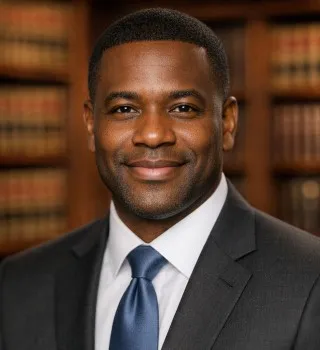


A Waterbury Superior Court jury awarded $15,235,245 to the family of Dominique Dalessio, a 20-year-old Bethlehem, Connecticut woman killed in an April 2020 head-on collision. The civil verdict, returned April 28, 2026 after roughly three hours of deliberation, found defendant Jamall Smith liable for negligence in Dalessio's death. Dalessio had been a passenger in Smith's BMW when he crossed the centerline of East Main Street in Waterbury and struck an oncoming Honda Accord. Plaintiff's counsel was Christopher Houlihan of Hartford-based RisCassi & Davis.
Case at a Glance
- Verdict: $15,235,245 ($15 million noneconomic + $235,245 economic)
- Case Type: Wrongful Death (Auto Accident, Centerline Crossover)
- Court: Waterbury Superior Court, Connecticut
- Verdict Date: April 28, 2026
- Jury Deliberation: Approximately 3 hours
- Crash Date: April 22, 2020
- Crash Location: East Main Street near Newington Avenue, Waterbury, CT
- Plaintiff: Family of Dominique Dalessio (deceased, age 20, of Bethlehem, CT)
- Defendant: Jamall Smith
- Plaintiff Attorney: Christopher Houlihan, RisCassi & Davis (Hartford, CT)
What Happened on East Main Street?
According to the lawsuit and Waterbury Police Department records cited in the case, Smith was driving a BMW westbound on East Main Street near the intersection of Newington Avenue around 10:30 p.m. on April 22, 2020. He crossed into the opposing lane and struck a 2007 Honda Accord traveling in the opposite direction.
Dalessio, a passenger in Smith's vehicle, was taken to a hospital with life-threatening injuries and died six days later. Smith and the driver of the Honda were also hospitalized. The Honda driver suffered serious injuries but survived.
What Did the Jury Find?
After approximately three hours of deliberation, the jury returned a verdict for the plaintiff and assessed total damages of $15,235,245. Of that, $235,245 was awarded as economic damages, covering medical and funeral expenses, and $15 million was awarded as noneconomic damages for the loss of Dalessio's life.
Court filings show the jury found Smith acted with "reckless disregard for the safety of others" and that his conduct was the cause of the crash and Dalessio's fatal injuries. The plaintiff's complaint had alleged that Smith was driving under the influence and at an unreasonable speed, but the jury did not find either of those allegations proven. The verdict on liability rested on negligence and reckless conduct, not intoxication.
"This was a profoundly tragic loss," Houlihan said in a statement following the verdict. "Dominique's life was taken far too soon due to reckless and preventable conduct. While no verdict can ever replace her, we are grateful the jury delivered justice in her name and provided her family with a meaningful measure of accountability and closure."
The Criminal Case Came First, and Ended Much Lighter
Smith was arrested by Waterbury police in May 2020 on charges that included second-degree manslaughter, second-degree assault, illegal operation of a motor vehicle while under the influence, and failure to drive in the proper lane.
The criminal case resolved nearly five years later. In April 2025, Smith was convicted of "misconduct with a motor vehicle," a Connecticut charge meaningfully less severe than the manslaughter and DUI charges originally filed. He was sentenced three months later to five years in jail, fully suspended, and five years of probation. He served no incarceration time on the conviction.
The civil verdict, returned roughly one year after the criminal disposition, delivered the larger accountability outcome.
Why a Civil Verdict Matters Even After a Criminal Conviction
Civil and criminal cases run on different standards of proof. Criminal prosecutors must prove their case "beyond a reasonable doubt." Civil plaintiffs only need to prove their case by a "preponderance of the evidence," meaning more likely than not. That is one reason a defendant can be acquitted of a criminal charge or pleaded down to a lesser one yet still be found liable in civil court for the same underlying conduct.
Civil cases also serve a different purpose. Criminal convictions punish the defendant. Civil verdicts compensate the people harmed. For families who lose a loved one, the civil suit is often the only path to financial accountability for the lifetime of harm caused, regardless of what happens in the criminal courtroom.
The Dalessio case is a clean illustration of that pattern. The criminal court reduced the case to a misdemeanor-level conviction with no jail time. The civil jury, hearing essentially the same conduct, valued the loss of Dalessio's life at $15 million. The case adds to a growing body of Connecticut verdict news where families have pursued civil accountability after criminal cases ended in lighter outcomes.
Results like this one show what civil juries are willing to award when a plaintiff team builds the case patiently across years of criminal and civil proceedings. Verdicts like this one deserve to be seen. Major Verdict is the only platform where plaintiff attorneys can publicly display their trial results and settlements, for free. Create your profile today and let your record speak for itself.
Frequently Asked Questions
Q: What's the difference between a civil wrongful death verdict and a criminal conviction?
Civil and criminal cases run on different standards of proof. Criminal prosecutors must prove guilt "beyond a reasonable doubt." Civil plaintiffs only need to prove their case by a "preponderance of the evidence," which is a lower standard meaning more likely than not. A defendant can be acquitted in criminal court (or pleaded down to a lesser charge, as happened here) yet still be found liable in civil court for the same underlying conduct.
Q: Why did the family sue the driver of the vehicle their loved one was riding in?
Connecticut law allows passengers and their families to sue a negligent driver, even when the driver was operating the same vehicle. Dalessio was a passenger in Smith's BMW. The legal theory was straightforward: Smith owed a duty of reasonable care to his passenger, breached that duty by crossing the centerline into oncoming traffic, and caused her death. The fact that Dalessio was in his vehicle did not bar the wrongful death claim.
Q: How can a jury award $15 million when economic damages were only $235,245?
Wrongful death damages in Connecticut include both economic losses (medical bills, funeral expenses, lost future earnings) and noneconomic losses, which value the loss of life itself. The $15 million in noneconomic damages reflects the jury's valuation of Dalessio's life: the years she would have lived, the relationships and experiences taken from her family, and the gravity of the conduct that ended her life at age 20. Noneconomic damages routinely exceed economic damages in fatal injury cases, especially when the deceased was young.
NOT FOR REPRINT
© 2026 Major Verdict, LLC. All rights reserved. For more information visit our reuse and editorial standards information.