
An Eau Claire County, Wisconsin jury has returned a $5.5 million personal injury verdict against retailer Menard, Inc. after a temporary forklift operator at the company's Eau Claire distribution facility dropped metal pallets on the head of a 46-year-old truck driver. The jury assigned 100 percent of the fault to Menards and its forklift operator and zero percent to the plaintiff. The award is reportedly the largest forklift injury verdict against Menards in Wisconsin history. Attorney Chris MacGillis of the MacGillis Law Group, LLC tried the case under docket number 22-CV-0521.
Case at a Glance
- Verdict: $5,500,000
- Case Type: Workplace Forklift Injury / Premises Liability
- Court: Eau Claire County Circuit Court, Wisconsin (Case No. 22-CV-0521)
- Verdict Date: April 24, 2026
- Plaintiff: 46-year-old truck driver (name not publicly released)
- Defendant: Menard, Inc.
- Plaintiff Attorney: Chris MacGillis, MacGillis Law Group, LLC
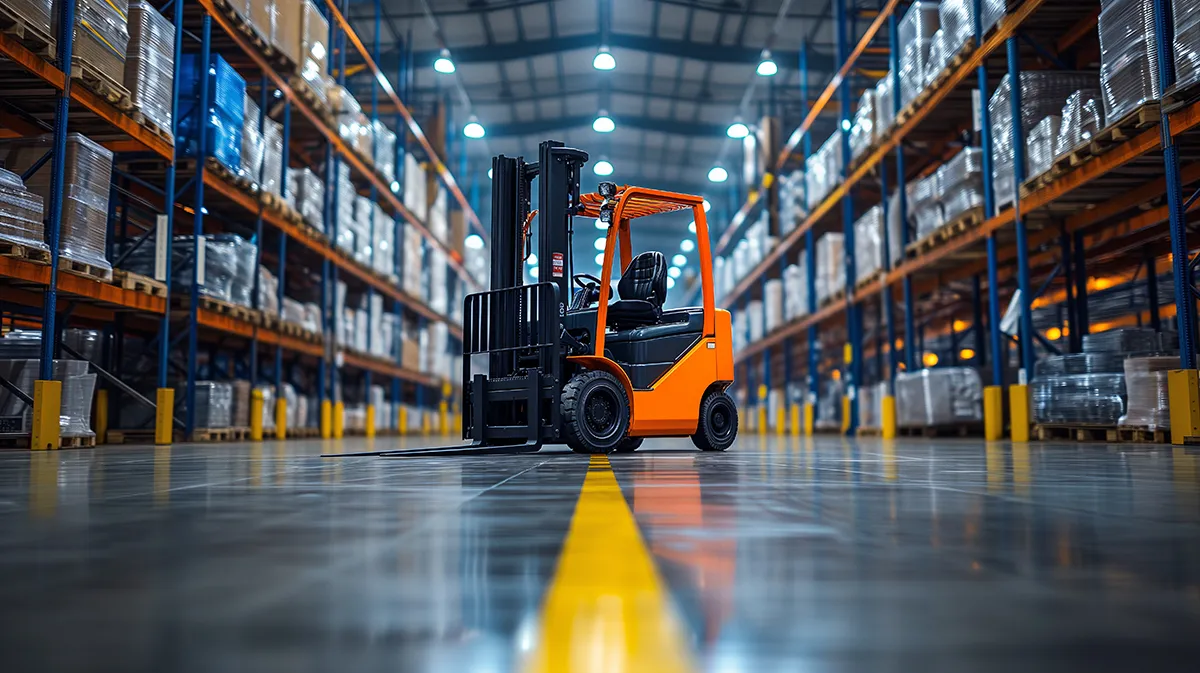
The plaintiff, a truck driver delivering to the Menards Eau Claire distribution facility, was struck in the head by metal pallets being moved by a temporary worker operating a forklift at the site. The blow caused a severe laceration that required emergency surgery and left the plaintiff with permanent injuries, according to local Wisconsin news coverage and the MacGillis Law Group.
According to evidence presented at trial, multiple Menards employees acknowledged that the forklift operator had violated a known safety rule when the pallets were dropped.
The plaintiff's case centered on a documented breakdown in how Menards onboarded and supervised the temporary forklift operator. Trial evidence showed that Menards:
- Did not properly certify, train, or supervise the temporary worker before authorizing him to operate a forklift
- Operated in violation of OSHA powered industrial truck standards, which require documented operator training and evaluation before solo operation
- Had been on notice of prior, similar forklift incidents at other Menards distribution centers and failed to address the underlying safety gaps
- Attempted at trial to shift blame to the temp staffing agency and to the injured truck driver himself
The jury rejected the comparative-fault theory and assigned all liability to Menards and its operator.
The plaintiff sustained a severe head laceration that required emergency surgical repair. According to the firm, he was left with permanent injuries as a result of the incident, which formed the basis of the substantial compensatory award.
For plaintiff attorneys handling Wisconsin workplace accident cases, the result is a useful data point. The case demonstrates a jury's willingness to hold a large retailer fully responsible when a temporary worker is put on dangerous equipment without OSHA-compliant certification and supervision, and when prior similar incidents can be put in front of the jury as evidence of a known, unaddressed pattern.
In a statement released after the verdict, MacGillis said: "These are the types of verdicts that lead to change."
Verdicts of this size against a regional retailer the size of Menards are relatively rare, particularly on a 100-percent-liability finding with no comparative fault. Major Verdict tracks significant plaintiff verdicts and settlements across all 50 states. Browse the latest results or find a plaintiff attorney with a proven trial record in Wisconsin.
Q: Are companies liable for injuries caused by temporary or staffing-agency workers?
Yes, when the host employer controls the work, training, and equipment. Under both common-law agency principles and OSHA's "host employer" guidance, a company that puts a temp worker on machinery without proper certification and supervision can be held directly liable for injuries that result, even if the worker is technically employed by a staffing agency.
Q: What does OSHA require for forklift operator training?
OSHA's powered industrial truck standard (29 CFR 1910.178(l)) requires that every forklift operator receive formal instruction, hands-on training, and a documented performance evaluation before operating a forklift independently. Refresher training is required after near-misses, observed unsafe operation, or assignment to a different type of equipment.
Q: Can prior similar incidents be used as evidence in a Wisconsin personal injury case?
In some circumstances, yes. Evidence of prior similar incidents may be admissible to show notice of a hazard and the foreseeability of harm, particularly where the plaintiff alleges the defendant failed to correct a known unsafe condition. Admissibility is governed by Wisconsin's evidence rules and is decided case-by-case by the trial court.