
Latest Personal Injury Verdict News from New York

Browse all personal injury verdict news from New York.

Other useful New York links: New York personal injury resources for the public. Browse some of the most experienced injury attorneys in New York.
Toxic Tort
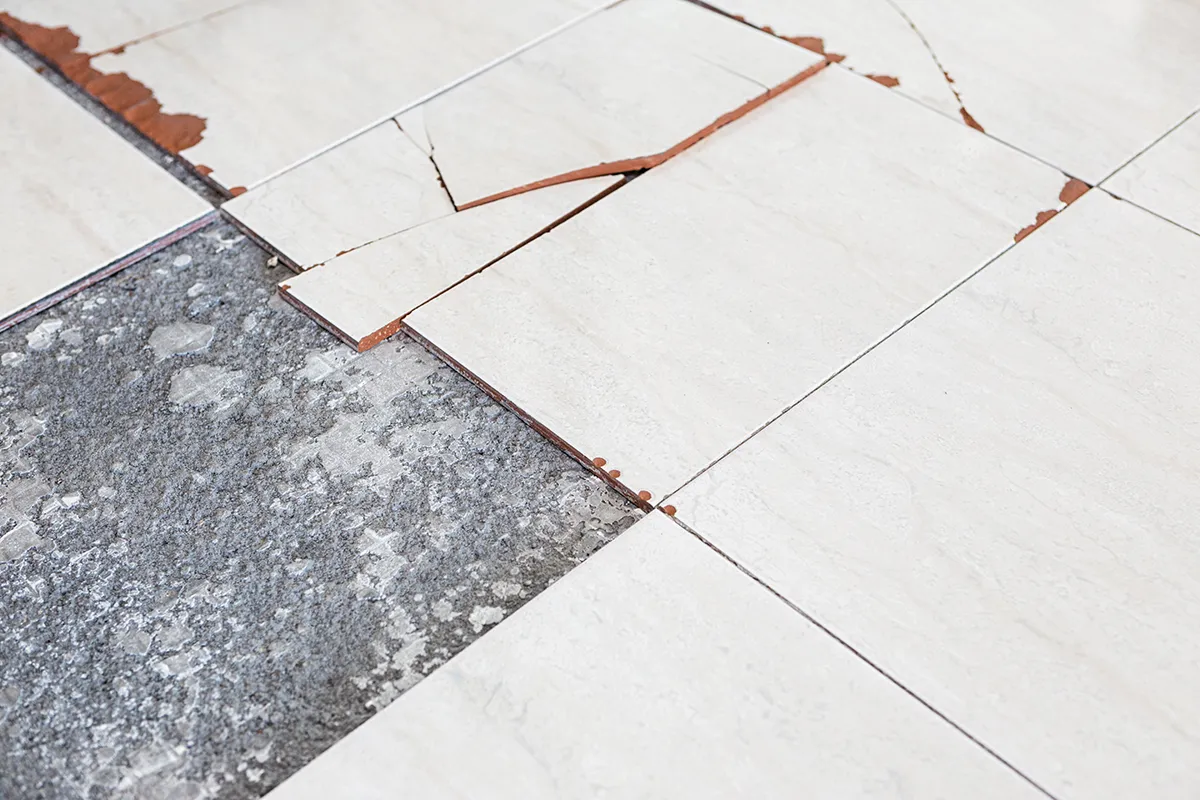
Asbestos floor tiles being removed

New York Jury Hits American Biltrite With $25 Million Asbestos Tile Verdict

A New York County jury awarded $25 million on April 29, 2026 to a mesothelioma victim who blamed his cancer on years of installing and removing American Biltrite's Amtico-brand asbestos floor tiles. The verdict, returned before the Honorable Judy J. Kim, included $20 million in compensatory damages and $5 million in punitive damages against American Biltrite, Inc. Plaintiff partners Brittany A. Russell and Pierre Ratzki of Weitz & Luxenberg tried the case.Case at a Glance Verdict: $25,000,000 Case Type: Asbestos product liability (mesothelioma) Court: New York County, New York Verdict Date: April 29, 2026 Defendant: American Biltrite, Inc. Plaintiff Attorneys: Brittany A. Russell and Pierre Ratzki, Weitz & LuxenbergWhat Did the Jury Award? The jury split the $25 million into two distinct categories. Compensatory damages totaled $20 million, with the panel awarding $10 million for past pain and suffering and another $10 million for future pain and suffering. On top of that, the jury added $5 million in punitive damages, finding that American Biltrite acted with wanton, reckless, and malicious disregard for the safety of people exposed to its products. The split is unusual in its symmetry. Equal awards for past and future pain and suffering signal a jury that took the plaintiff's ongoing prognosis seriously, treating mesothelioma not as a closed injury but as a continuing one.How Was the Plaintiff Exposed? According to the firm, the plaintiff was exposed to asbestos through years of installing and removing Amtico-brand floor tiles manufactured by American Biltrite. Cutting, scraping, and removing asbestos-containing tiles releases respirable fibers, and floor tile installers have long been recognized as a high-risk occupational group in mesothelioma research. The plaintiff was later diagnosed with mesothelioma, the aggressive cancer of the lining of the lungs, abdomen, or heart that is almost exclusively linked to asbestos exposure. The latency period between exposure and diagnosis typically runs 20 to 50 years.Why Did the Jury Award Punitive Damages? The punitive damages turned on a single fact that Weitz & Luxenberg put squarely in front of the jury. "By 1981, American Biltrite had developed a patent to manufacture a non-asbestos tile using the same manufacturing process and equipment it used for asbestos tiles," plaintiff's counsel stated. That detail reframes the case. The argument is not just that American Biltrite sold a hazardous product, but that the company knew how to make a safer alternative on the same equipment and continued selling the asbestos version anyway. New York juries can award punitive damages when a defendant's conduct rises above ordinary negligence and shows conscious disregard for public safety, and the 1981 patent gave the jury a concrete date to anchor that finding.What This Verdict Means for Asbestos Litigation The $25 million award lands in the heart of the New York verdict news docket, where Weitz & Luxenberg has built a long track record. The firm secured a $117 million single-plaintiff verdict in 2025, also led by Brittany A. Russell, and a string of eight-figure mesothelioma awards before that. For floor tile cases specifically, the verdict reinforces a pattern. Tile installers, removers, and renovation workers continue to file claims decades after their exposures, and juries continue to credit the medical link between cumulative low-dose exposure and mesothelioma. Manufacturers facing this docket have to contend not only with the science but with their own historical paper trails, including patents, internal memos, and product specs that document what they knew and when. The verdict is subject to potential post-trial motions and appeal. If you or someone you love has been seriously injured, verdicts like this one show what juries are willing to award when the evidence is strong and the attorney is prepared. Find a plaintiff lawyer on Major Verdict who has the trial record to back it up.Frequently Asked Questions Q: What is mesothelioma, and why is it linked to asbestos floor tiles? Mesothelioma is a cancer of the thin tissue that lines the lungs, abdomen, or heart, and it is overwhelmingly caused by inhaling or ingesting asbestos fibers. Floor tiles manufactured with asbestos release respirable fibers when they are cut, sanded, scraped, or broken during installation and removal, putting installers, demolition workers, and renovators at elevated risk. Because the disease has a 20 to 50 year latency period, diagnoses today often trace back to exposures from the 1960s, 1970s, and early 1980s. Q: Why do asbestos juries award punitive damages? Punitive damages are reserved for conduct that goes beyond ordinary negligence and shows conscious disregard for safety. In asbestos cases, juries often hear evidence that manufacturers knew about the cancer risk for decades but continued selling asbestos products, sometimes even after a non-asbestos alternative was available on the same equipment. When that history is documented in patents, internal correspondence, or industry studies, juries have grounds to find the kind of reckless or malicious conduct that supports a punitive award. Q: Can someone still sue for asbestos exposure that happened decades ago? In most states, yes. Mesothelioma's long latency period is built into how the law treats these cases, and the statute of limitations typically begins to run from the date of diagnosis rather than the date of exposure. The specific deadline varies by state and depends on whether the claim is brought as a personal injury or a wrongful death action, so anyone diagnosed with mesothelioma should consult a plaintiff attorney experienced in asbestos litigation as soon as possible.

Commercial Trucking Crash

Manhattan Firm Secures $2,145,000 Settlement After Bucket Truck Reverses Into Stopped Car Twice

A Manhattan personal injury law firm has secured a $2,145,000 settlement for three occupants of a vehicle that was struck twice by a reversing commercial bucket truck at a New York City intersection. The case against the driver and his employer, E-J Electric Installation Company, resolved just one day before scheduled jury selection, with the lead plaintiff receiving $2,020,000 after suffering multiple surgeries and losing his job.Case at a Glance Settlement: $2,145,000 (total) Case Type: Commercial Truck Accident Location: West 165th Street & Fort Washington Avenue, Manhattan, NY Incident Date: March 2018 Plaintiffs: Ollies Mercedes, Ramon Abreu, Raul Balbuena Defendant: Antonio Abreu; E-J Electric Installation Company Plaintiff Attorney: Michael Gunzburg, Michael Gunzburg, P.C.What Happened at the Intersection? In March 2018, Ollies Mercedes, Ramon Abreu, and Raul Balbuena were stopped at a red light at West 165th Street and Fort Washington Avenue in Manhattan. Antonio Abreu, a driver for E-J Electric Installation Company, was operating a commercial bucket truck nearby. According to the press release, Abreu reversed the truck at high speed into the stopped vehicle, then pulled forward and reversed a second time, striking the car again in the same incident. All three occupants were transported to the emergency room by ambulance.How Did Liability Get Resolved? The court granted the plaintiffs' motion for partial summary judgment on liability. That ruling meant the legal question of fault was settled before trial, the case moved forward solely on the issue of damages. Partial summary judgment on liability is a significant development in any personal injury case. It removes the risk of a jury finding for the defense on fault and allows the plaintiff's legal team to focus entirely on presenting the full scope of injuries and financial losses. Raul Balbuena settled early in the proceedings. Ollies Mercedes and Ramon Abreu held out, ultimately reaching their settlements the day before jury selection was set to begin.What Were the Injuries? The three plaintiffs sustained varying degrees of injury, with Mercedes bearing the most serious consequences. Ollies Mercedes, who was 24 years old at the time of the crash, suffered: Herniated discs in his neck and lower back A torn shoulder labrum requiring surgery with four permanent anchors A torn ligament in his right foot requiring open surgical repair Chondromalacia and synovitis Mercedes was unable to work for nine months following the crash. He eventually left his position at FedEx entirely due to his injuries. His settlement totaled $2,020,000. Ramon Abreu was unable to work for approximately two years. His settlement was $175,000. Raul Balbuena, who settled early, received $50,000.Why Did This Case Settle Just Before Trial? Commercial vehicle cases often resolve on the eve of trial once defendants weigh the cost of an adverse jury verdict. With liability already decided by the court, the only remaining question for a jury would have been how much to award. For E-J Electric Installation Company, the calculus at that point was straightforward: proceed to trial with a plaintiff who had documented multiple surgeries, permanent hardware in his shoulder, and a lost career, or negotiate. Mercedes and Abreu settled the day before jury selection. Attorney Michael Gunzburg commented on the outcome: "Ollies had multiple surgeries, lost his job, and had his life turned upside down, all because a commercial driver acted recklessly and a company failed to prevent it. Getting a result like this for him and his co-plaintiffs is exactly why we do this work." Cases involving commercial vehicle negligence in New York can produce significant results when liability is clear and injuries are well-documented. For a look at what plaintiff attorneys across the country are winning at trial and in settlement, visit the latest personal injury verdict news at Major Verdict. If you or someone you love has been seriously injured in a truck or commercial vehicle accident, results like this one show what can be achieved when the evidence is strong and the attorney is prepared. Find a plaintiff lawyer on Major Verdict who has the trial record to back it up.Case FAQ Q: How are damages divided when multiple plaintiffs are part of the same settlement? A: Each plaintiff's share is determined by the severity of their injuries, the economic losses they suffered, and sometimes the strength of their individual claims within the case. In this case, Ollies Mercedes received $2,020,000 of the $2,145,000 total, reflecting the extent of his surgeries, lost income, and long-term impact. Plaintiffs with less severe injuries, like Balbuena, may settle separately and earlier in the litigation. Q: What does partial summary judgment on liability mean in a personal injury case? A: A partial summary judgment on liability means the court ruled before trial that the defendant was legally responsible for the incident. The case then proceeds only on the question of damages: how much money the injured parties should receive. This ruling significantly strengthens the plaintiff's position heading into trial or settlement negotiations.

Premises Liability

$36.4 Million Bronx Verdict After Worker Suffers Traumatic Brain Injury at Foodtown Supermarket

A Bronx County jury has awarded $36,398,000 to a worker who suffered a traumatic brain injury and serious orthopedic injuries after slipping on cooking oil applied to a makeshift ramp inside a Parkchester supermarket. The verdict, returned February 4, 2026 in the Supreme Court of the State of New York, Bronx County, is the largest premises-accident personal injury verdict in the Bronx in more than seven years, and the largest personal injury verdict on record in New York State for an individual undocumented immigrant worker. Case at a Glance Verdict: $36,398,000 Case Type: Premises Liability / Traumatic Brain Injury Court: Supreme Court of New York, Bronx County Judge: Hon. Wilma Guzman Verdict Date: February 4, 2026 Case No.: 31210/2017E Plaintiff: Honorio Rosario-Silverio Defendants: PPC Commercial, LLC; 1489 Food Corp. d/b/a Foodtown Supermarket (Parkchester, Bronx) Plaintiff Attorneys: Mitchell Proner and Daisy Koch, Proner & Proner (Manhattan)What Happened in the Foodtown Basement On October 14, 2017, Honorio Rosario-Silverio was working at a Foodtown supermarket in the Parkchester section of the Bronx. His employer, a non-party to the lawsuit, had been hired to install a commercial rack refrigeration system in the store's basement. To move the heavy equipment downstairs, workers placed a metal plate over the basement stairway to create a makeshift ramp. According to evidence presented at trial, cooking oil was then applied to the surface of the ramp so the refrigeration components would slide down more easily. The plaintiff contended the oil was supplied at the direction of the supermarket owner to speed up the work. While positioned at the top of the ramp to guide the equipment, Rosario-Silverio slipped. The oil that had coated the ramp had also worked its way onto his shoes. He fell down the incline. At Jacobi Hospital, he was treated and discharged with four stitches to his forearm. It appeared, initially, to be a minor injury. It was not.A "Minor Injury" That Changed Everything Over time, Rosario-Silverio was diagnosed with significant shoulder and cervical spine injuries requiring surgery. He was also diagnosed with a mild traumatic brain injury. The plaintiff's team presented advanced neurological evidence to establish the brain injury objectively. A brain-injury expert testified that DTI MRI imaging and NeuroQuant volumetric analysis, technologies that measure structural changes in brain tissue, confirmed trauma and placed Rosario-Silverio at increased risk for early dementia. A neuroradiologist corroborated those findings. The treating cervical spine and shoulder surgeons each testified that the surgeries performed were caused by the 2017 fall, not a separate accident in 2020 that the defense attempted to use to shift blame. The jury's damages award reflected the full scope of the injury: $5,000,000 - past pain and suffering $20,000,000 - future pain and suffering $10,000,000 - future medical expenses $468,000 - past lost earnings $930,000 - future lost earningsHow the Defense Fought and Why the Jury Disagreed The defense contested nearly every element of the case. On liability, they argued the supermarket owner was not present during the work and that all means and methods were controlled solely by Rosario-Silverio's employer. They also claimed he chose to walk up the ramp rather than use the adjacent staircase, making his own fall the product of his own decision. On damages, the defense presented a neurologist and neuroradiologist who testified that Rosario-Silverio had sustained no brain or neck injury and was capable of returning to work. They pointed to a 2020 accident as the true source of his orthopedic complaints and argued the plaintiff was seeking double recovery. Throughout the trial, the defense also attacked Rosario-Silverio's credibility directly, emphasizing that he was undocumented, paid off the books, and had not fully reported his earnings for tax purposes. The jury rejected those arguments in full. "This verdict reflects the jury's recognition that serious brain and orthopedic injuries are real and life-altering, even when defendants try to dismiss them as minor, unrelated, or the product of a later incident," said Mitchell Proner, trial counsel for the plaintiff. "The defense highlighted his immigration status, his off-the-books earnings, and a subsequent accident, but the evidence showed that what happened in that supermarket basement permanently changed Mr. Rosario-Silverio's life."Why This Verdict Matters This result is significant on two levels. First, the medical evidence strategy. The plaintiff's team used DTI MRI imaging and NeuroQuant analysis, tools not yet routine in courtrooms, to make an invisible injury visible to a jury. When the initial ER records showed only a forearm laceration, the defense had a compelling narrative. Plaintiff counsel dismantled it with objective imaging that the defense's own experts could not credibly refute. Second, the plaintiff's background. Defendants repeatedly raised Rosario-Silverio's undocumented status and off-the-books employment as reasons to discount his claims. The Bronx jury declined to do so. The result sets a clear record: immigration status does not diminish the value of a human life or the accountability of a property owner under New York premises liability law. For plaintiff attorneys handling traumatic brain injury or premises liability cases in New York, this verdict is a study in how to overcome a defense built on credibility attacks, competing causation theories, and a thin initial injury record. Major Verdict is the only platform where plaintiff attorneys publicly document their trial results and settlements, building a searchable record of what juries actually award. Browse the latest verdict news or find a plaintiff attorney in New York with the trial record to back it up. Plaintiff attorneys with results worth showcasing, create your free profile on Major Verdict and let your record speak for itself.FAQ Q: What is a mild traumatic brain injury and how do attorneys prove it in court? A: A mild traumatic brain injury, or mild TBI, refers to a brain injury that may not appear on standard imaging like a CT scan or conventional MRI but causes real, lasting neurological changes. In court, plaintiff attorneys increasingly rely on advanced imaging tools such as DTI MRI, which maps the structural integrity of white matter tracts in the brain, and NeuroQuant volumetric analysis, which compares brain structure against age-matched norms. In this case, those tools provided objective evidence of brain damage that overcame the defense's claim that Rosario-Silverio had sustained no neurological injury. Q: Can an undocumented worker sue for personal injury in New York? A: Yes. Under New York law, immigration status does not bar a person from bringing a personal injury claim or recovering damages. Undocumented workers are entitled to the same premises liability protections as any other person injured on someone else's property. Lost earnings claims can be more complex, but juries are not permitted to reduce awards based on a plaintiff's immigration status alone. This verdict reinforces that principle at a historic scale. Q: What is premises liability and when does it apply to a workplace accident? A: Premises liability holds property owners responsible for maintaining safe conditions on their property for people who are lawfully present. Even when a worker is employed by a contractor rather than the property owner, the owner can be held liable if an unsafe condition on the property, such as an oil-coated makeshift ramp, caused the injury. In this case, the jury found PPC Commercial and Foodtown Supermarket liable despite their argument that the plaintiff's employer controlled all means and methods of the work.


Member Search

Latest Featured Members

View All Major Verdict Members
Search Members by State
Sample 1 Sample 2 Sample 3 Sample 4 Sample 5 Sample 6 Sample 7 Sample 8 Sample 9 Sample 10 Sample 11 Sample 12
Sample 13 Sample 14 Sample 15 Sample 16 Sample 17 Sample 18 Sample 19 Sample 20 Sample 21 Sample 22 Sample 23 Sample 24
Sample 32 Sample 25 Sample 26 Sample 27 Sample 28 Sample 29 Sample 30 Sample 31 Sample 33 Sample 34 Sample 35 Sample 36
Sample 37 Sample 38 Sample 39 Sample 40 Sample 41 Sample 42 Sample 43 Sample 44 Sample 45 Sample 46 Sample 47 Sample 48

Plaintiff trial attorneys. Join now for free!

ShowcaseYour Experience

Major Verdict gives you a free public profile to showcase your hard-earned trial verdicts and notable settlements. Let your results speak for themselves to potential clients and peers nationwide. You control what you share, when you edit, and how your public record is presented.