
Latest Personal Injury Verdict News from Kansas

Browse all personal injury verdict news from Kansas.

Other useful Kansas links: Kansas personal injury resources for the public. Browse some of the most experienced injury attorneys in Kansas.

Product Liability
Skid steer on worksite

Kansas Court of Appeals Upholds $22 Million Skid Steer Verdict for Paralyzed Worker

The Kansas Court of Appeals has affirmed a $22 million product liability verdict against Kubota Tractor Corporation in a case brought by a young farm worker who was paralyzed when a skid steer crushed him. In an opinion filed May 15, 2026, the court rejected Kubota's appeal and upheld the Reno County jury's finding that the company failed to adequately warn of a hidden crush hazard. The plaintiff, Kolton Kincaid, was represented by Michael J. Wyatt and Jesse Tanksley of Mann Wyatt Tanksley in Hutchinson, Kansas.Case at a Glance Verdict: Over $22 million (reduced to $11,138,422.40 after the jury assigned Kubota 50% of the fault) Appellate Result: Affirmed by the Kansas Court of Appeals on May 15, 2026 Case Type: Product Liability (Failure to Warn) Court: Kansas Court of Appeals (trial held in Reno County District Court) Original Verdict Date: November 14, 2023 Plaintiff: Kolton Kincaid Defendant: Kubota Tractor Corporation Plaintiff Attorneys: Michael J. Wyatt and Jesse Tanksley, Mann Wyatt TanksleyWhat Did the Kansas Court of Appeals Decide? In a memorandum opinion, a three-judge panel affirmed the district court on both issues Kubota raised on appeal. Kubota had argued that the trial court should have granted it judgment as a matter of law, contending that it owed no duty to warn Kincaid and that Kincaid was required to present expert testimony on the standard of care. The court disagreed on both points. It held that the extent of Kubota's duty to warn was a question for the jury, not something the court could decide as a matter of law. It also held that Kansas law does not require expert testimony to prevail on a failure-to-warn claim, because the adequacy of a warning is itself an issue for the jury. The result leaves the jury's verdict in place. The panel wrote that it declined "to find that this trial was tainted by error." The full Kansas Court of Appeals opinion is available through CourtListener.How Did the Skid Steer Injury Happen? In November 2013, Kincaid and two other young workers were installing a fence on a farm. Because the ground was cold, wet, and muddy, the crew rode a Kubota SVL90 compact track loader out to the worksite, and Kincaid sat on the front step used to climb into the cab. As the machine approached a ravine, Kincaid signaled the operator to raise the loader arms. When the operator did, the mechanism caught Kincaid between the grapple attachment and the cab overhang, compressing his spine. The injury left him a paraplegic. According to the court's opinion, Kubota's records showed it had sold more than 136,000 skid steers in the United States between 2010 and 2023, and Kincaid's injury was the only reported instance of someone being hurt while riding on one.Why Was the $22 Million Award Reduced? The jury awarded damages of over $22 million but found Kubota 50% at fault. Under Kansas comparative fault rules, that finding cut the recovery in half, producing a judgment of $11,138,422.40. The verdict covered Kincaid's past and future medical expenses along with his pain, suffering, and mental anguish. That breakdown is why the case is often described both as a $22 million verdict and an $11.1 million judgment. The larger figure reflects the jury's total damages finding, and the smaller figure reflects what Kubota was ordered to pay after the comparative fault reduction.Why Did the Failure-to-Warn Claim Succeed? Kubota's machine carried warnings that told users to "never carry riders" and not to allow passengers on any part of the machine. Kincaid's case did not dispute that those warnings existed. Instead, his human factors expert testified that the warnings did not tell users about the specific danger that injured him: the pinch point between the cab overhang and the loader arms, which the expert described as a latent hazard. The jury concluded that a reasonable user might not have understood from the existing warnings that raising the front attachment could crush a person seated on the center step. The Court of Appeals found that conclusion was supported by the evidence and refused to overturn it.Who Represented Kolton Kincaid? Michael J. Wyatt and Jesse Tanksley of Mann Wyatt Tanksley tried the case and defended the verdict through appeal. After the original verdict, Wyatt said he was "thankful the jury saw through the defense team's arguments" and added that the firm was "so grateful for our client's courage and perseverance." Tanksley said the goal throughout the case was making sure Kincaid "received justice, full compensation, and most importantly that his voice was heard." Verdicts like this one deserve to be seen. Major Verdict is the only platform where plaintiff attorneys can publicly display their trial results and settlements, for free. Create your profile today and let your record speak for itself.Frequently Asked Questions Q: What does it mean that the verdict was upheld on appeal? When a jury returns a verdict, the losing side can ask a higher court to review the trial for legal errors. Here, Kubota appealed and asked the Kansas Court of Appeals to throw out the verdict. The court reviewed the record, found no reversible error, and affirmed the verdict, which means the jury's decision stands. Q: Why was the $22 million award reduced to $11.1 million? The jury found Kubota 50% at fault for the injury. Kansas applies comparative fault, so the total damages of over $22 million were reduced in proportion to that finding, leaving a judgment of $11,138,422.40 against Kubota. Q: What is a failure-to-warn product liability claim? A failure-to-warn claim alleges that a product was made unreasonably dangerous because the manufacturer did not adequately warn users about a hazard. In this case, the plaintiff argued that Kubota's warnings did not specifically alert users to the crush hazard at the pinch point that caused his paralysis, and the jury agreed.

Product Liability
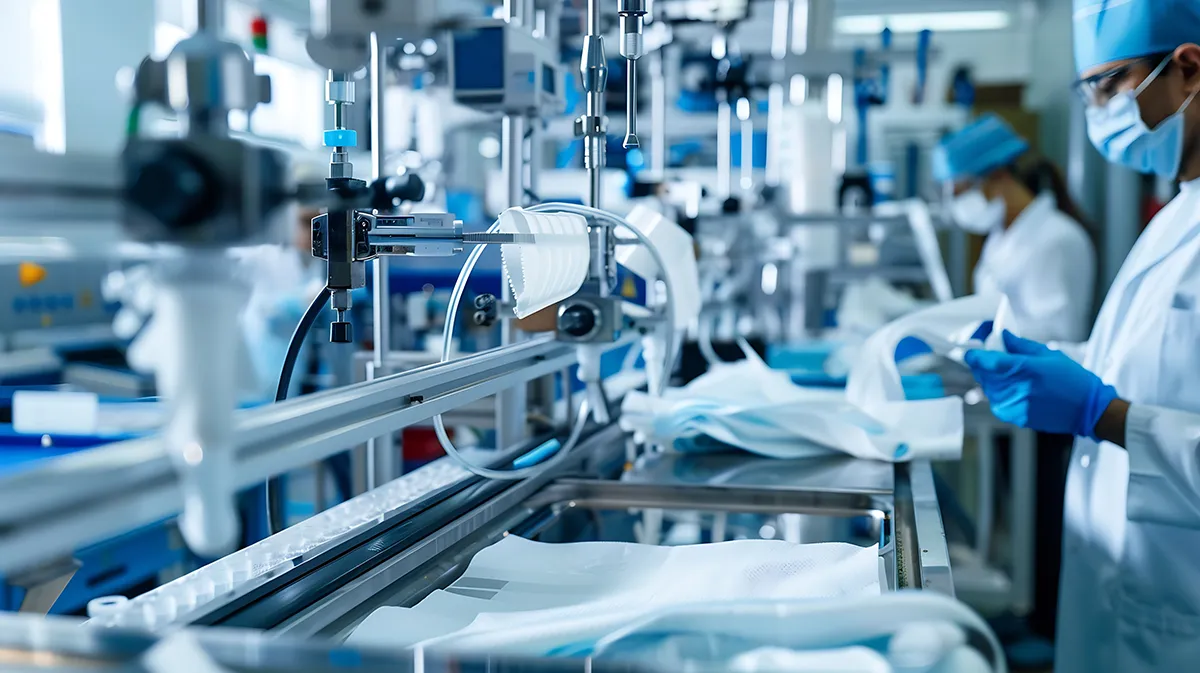
Medical devices being manufactured

$7.65 Million Kansas Product Liability Verdict in KU Med Heater-Cooler Death

A Wyandotte County jury delivered a $7.65 million Kansas product liability verdict on April 28, 2026, in favor of the family of Stephen Nolte, a 71-year-old Navy veteran and retired electrician who died from a Mycobacterium chimaera infection contracted during open-heart surgery at The University of Kansas Hospital. The jury allocated 88% of fault to The University of Kansas Hospital Authority, which had settled confidentially with the Nolte family shortly before trial, and 12% to medical device manufacturer LivaNova USA Inc., which contested liability through a 12-day trial. Plaintiff attorney Lynn R. Johnson of Shamberg, Johnson & Bergman tried the wrongful-death and product liability claims against LivaNova, securing a verdict that placed responsibility on both the hospital and the manufacturer of the contaminated heater-cooler device.Case at a Glance Verdict: $7,650,000 Case Type: Product Liability / Wrongful Death Court: Wyandotte County District Court, Kansas Verdict Date: April 28, 2026 Plaintiffs: Christine Nolte and Christopher Nolte (widow and son of Stephen Nolte) Defendants: The University of Kansas Hospital Authority (settled confidentially before trial); LivaNova USA Inc. Plaintiff Attorney: Lynn R. Johnson, Shamberg, Johnson & Bergman Apportionment: 88% to The University of Kansas Hospital Authority; 12% to LivaNovaWhat Happened to Stephen Nolte? Stephen Nolte, a Raytown resident, underwent an aortic valve replacement at The University of Kansas Hospital on March 6, 2019. The surgery itself was successful. Within months, however, Nolte developed disseminated Mycobacterium chimaera, a slow-growing bacterial infection traced to the heater-cooler device used to regulate his body temperature during the procedure. He battled the systemic infection for sixteen months before dying on July 8, 2020. His widow, Christine Nolte, and son, Christopher Nolte, filed suit in 2021 against The University of Kansas Hospital Authority and LivaNova USA Inc. The Nolte case is one of more than two dozen filed in Wyandotte County District Court arising from the same outbreak. Court filings indicate that 25 patients contracted M. chimaera at KU Med after open-heart procedures involving heater-cooler devices, with 11 of those patients dying.How Did the Plaintiff Build the Case? At trial, plaintiff counsel argued that two failures combined to kill Stephen Nolte: a hospital that stopped following the device manufacturer's cleaning protocol, and a device design that allowed contaminated vapor to escape into the operating room. Testimony established that on October 16, 2018, KU Med's chief perfusionist, Jamie Newberry, directed staff to stop disinfecting the heater-cooler units with bleach and to stop adding hydrogen peroxide to the water tanks. Both steps were described in LivaNova's instructions for use. Staff were directed to drain the tanks daily instead. By the time of Nolte's March 2019 surgery, the unit involved had not been disinfected in five months. Johnson argued to the jury that the patients who contracted M. chimaera "had one and only one thing in common." A LivaNova heater-cooler device was in the operating room for every one of them. He also presented testimony that the machines had been contaminated with the bacteria at LivaNova's manufacturing plant in Germany, and pointed to a design feature in which contaminated water in the unit's upper chamber could be aerosolized by exhaust fans and dispersed into the operating room.Why Did the Kansas Product Liability Verdict Split 88/12? After 12 days of trial and three and a half hours of deliberation, the Wyandotte County jury returned its allocation: 88% of fault to The University of Kansas Hospital Authority and 12% to LivaNova. The hospital had already settled with the Noltes confidentially, dismissed by Judge Courtney Mikesic on April 13, 2026, with no admission of liability. LivaNova's share of the $7.65 million in damages amounts to $918,000. The total damages broke down as follows: $3 million for noneconomic loss on the personal injury claim. On the wrongful-death claim, the jury awarded $650,000 in past economic loss, $550,000 in future economic loss, $2.7 million in past noneconomic loss, and $750,000 in future noneconomic loss. The 12% manufacturer apportionment is the headline of this Kansas product liability verdict for plaintiff attorneys watching from outside the state. Even when the immediate cause of harm was a downstream user deliberately deviating from documented safety procedures, the jury still found the manufacturer accountable for design and quality-control choices that made deviation more dangerous.The Broader M. chimaera Litigation The Nolte verdict is one of a small number of trial outcomes to emerge from a Wyandotte County litigation cluster involving more than two dozen patients and families. Roughly 17 of the cases against The University of Kansas Hospital Authority have resolved through confidential settlements. Several remain set for trial. The LivaNova/Sorin 3T heater-cooler device at the center of this litigation has been the subject of broader product liability litigation nationwide, including a $225 million resolution announced in 2019 covering many but not all heater-cooler claims. The Wyandotte County cases were not part of that earlier resolution and continue to move through Kansas state court.What This Kansas Product Liability Verdict Means for Plaintiff Attorneys For Kansas plaintiff lawyers, the Nolte verdict reinforces several practice points. Hospital infection cases involving documented protocol deviation present unusually clean liability narratives, particularly when manufacturer instructions have been disregarded by named hospital staff. Pairing a medical malpractice claim against the hospital with a product liability claim against the device manufacturer preserves recovery against the manufacturer even after a confidential hospital settlement. The 12% apportionment still produced a near-million-dollar judgment. The verdict also serves as a reference point for Kansas verdicts in hospital-acquired infection cases and adds another data point to the broader heater-cooler litigation now in its second decade. Major Verdict tracks significant plaintiff verdicts and settlements across all 50 states. Browse the latest results or find a plaintiff attorney with a proven trial record in your state.Frequently Asked Questions Q: How much was the Nolte verdict against KU Med and LivaNova? A Wyandotte County, Kansas, jury awarded $7.65 million in damages on April 28, 2026, in the Nolte family's lawsuit over a fatal Mycobacterium chimaera infection. The jury attributed 88% of fault to The University of Kansas Hospital Authority, which had settled with the family confidentially before trial, and 12% to LivaNova USA Inc., the manufacturer of the heater-cooler device used during Nolte's open-heart surgery. LivaNova's share of the damages amounts to $918,000. Q: What is M. chimaera and how is it linked to heater-cooler devices? Mycobacterium chimaera is a slow-growing nontuberculous mycobacterium that has been linked to a global outbreak of infections in open-heart surgery patients. Investigations identified contaminated heater-cooler devices, used to regulate patient body temperature during cardiopulmonary bypass, as the vehicle. The devices contain water tanks that can harbor the bacteria, and exhaust fans can aerosolize contaminated vapor into the sterile field of the operating room. Q: What was LivaNova's defense at trial? LivaNova denied liability and argued that the sole cause of the KU Med infection cluster was the hospital's October 2018 decision to stop disinfecting the heater-cooler devices according to the manufacturer's instructions. Defense counsel David Gross argued that when the cleaning instructions were followed, no infections occurred, and described the perfusionist's decision to halt disinfection as "a bacterial experiment." The jury still allocated 12% of fault to LivaNova.


Member Search

Latest Featured Members

View All Major Verdict Members
Search Members by State
Sample 1 Sample 2 Sample 3 Sample 4 Sample 5 Sample 6 Sample 7 Sample 8 Sample 9 Sample 10 Sample 11 Sample 12
Sample 13 Sample 14 Sample 15 Sample 16 Sample 17 Sample 18 Sample 19 Sample 20 Sample 21 Sample 22 Sample 23 Sample 24
Sample 32 Sample 25 Sample 26 Sample 27 Sample 28 Sample 29 Sample 30 Sample 31 Sample 33 Sample 34 Sample 35 Sample 36
Sample 37 Sample 38 Sample 39 Sample 40 Sample 41 Sample 42 Sample 43 Sample 44 Sample 45 Sample 46 Sample 47 Sample 48

Plaintiff trial attorneys. Join now for free!

ShowcaseYour Experience

Major Verdict gives you a free public profile to showcase your hard-earned trial verdicts and notable settlements. Let your results speak for themselves to potential clients and peers nationwide. You control what you share, when you edit, and how your public record is presented.