
Latest Personal Injury Verdict News from Oklahoma

Browse all personal injury verdict news from Oklahoma.

Other useful Oklahoma links: Oklahoma personal injury resources for the public. Browse some of the most experienced injury attorneys in Oklahoma.
Medical Malpractice
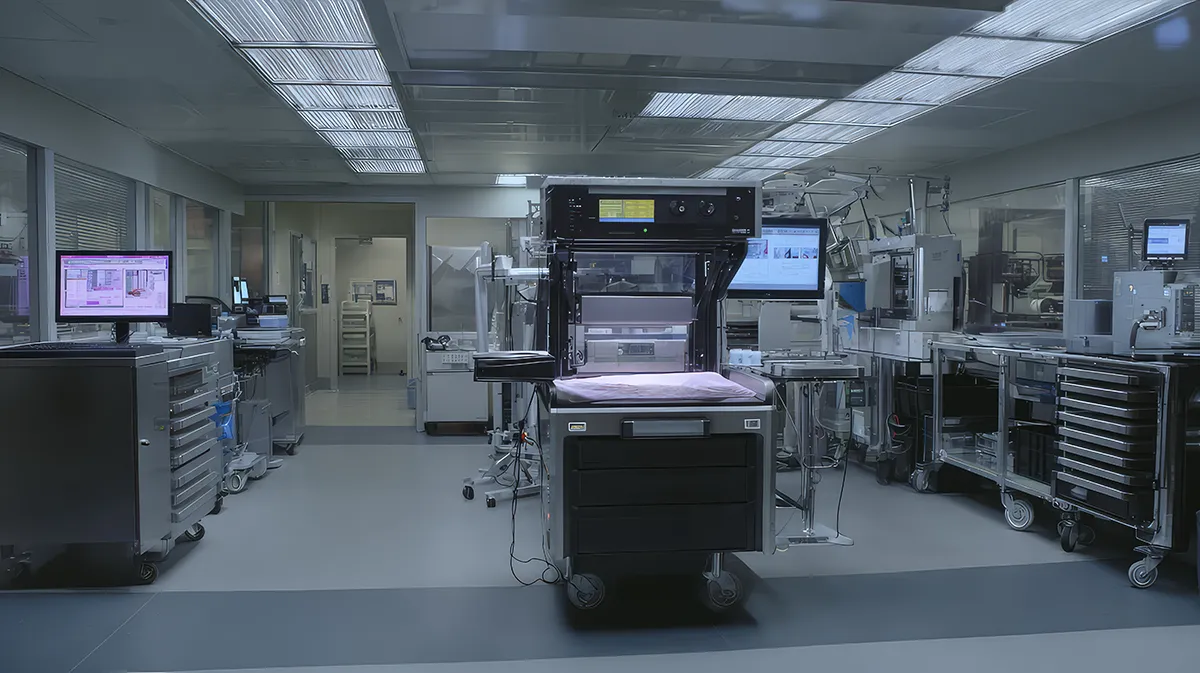
Pediatric emergency room

Tulsa Jury Returns $15 Million Medical Malpractice Verdict for Child Left Disabled by Missed Bacterial Meningitis

A Tulsa County jury awarded $15 million on May 27, 2026, to the family of August Montgomery, a 7-year-old girl left permanently disabled after a pediatric emergency room physician discharged her at five months old without ordering a blood culture or administering antibiotics. The verdict came down in Tulsa County District Court before Judge Kevin Gray in Montgomery v. Katie Jackson, M.D., et al., a medical malpractice case alleging failure to diagnose and treat bacterial meningitis. The plaintiff family is represented by Jeffrey Rasansky of Rasansky | McKenzie Law in Dallas, along with Sharon Morgan and Natalie D'Antonio of Wais, Vogelstein, Forman, Koch & Norman LLC. The jury deliberated for roughly four hours before returning its decision.Case at a Glance Verdict: $15 million Case Type: Medical Malpractice (Failure to Diagnose) Court: Tulsa County District Court, Oklahoma Verdict Date: May 27, 2026 Plaintiff: August Montgomery (minor, through her family) Defendant: Katie Jackson, M.D., et al. Plaintiff Attorneys: Jeffrey Rasansky (Rasansky | McKenzie Law); Sharon Morgan and Natalie D'Antonio (Wais, Vogelstein, Forman, Koch & Norman LLC) Judge: Kevin GrayWhat Happened in the Emergency Room? In December 2018, August Montgomery was brought to a Tulsa-area emergency room as an infant for her third hospital visit in five days. According to evidence presented at trial, she arrived with fever, vomiting, lethargy, respiratory symptoms, and decreased urine output. Laboratory testing at that third visit showed elevated white blood cell counts, which the plaintiff's standard-of-care expert testified were textbook indicators of a serious bacterial infection. Court testimony indicated that the treating pediatric ER physician diagnosed August with a possible viral illness and discharged her without ordering a blood culture or starting antibiotics. Less than 48 hours later, she returned to the emergency room with seizures and partial paralysis. Doctors then identified bacterial meningitis, but the infection had already done permanent damage.The Liability Theory The plaintiff's case turned on a single decision point. As lead trial counsel framed it, "The labs were in the chart. And the path that would have prevented all of this, a blood culture and a single dose of antibiotics, was on the table, but was not chosen." Medical experts called by the plaintiffs testified that a single dose of ceftriaxone administered at the earlier ER visit would have sterilized the bloodstream within roughly two hours and prevented the meningitis from progressing. The defense argued that the presentation was consistent with a viral illness, but the jury sided with the plaintiffs after four hours of deliberation.What the $15 Million Verdict Covers The Tulsa County jury awarded the $15 million figure to compensate for future medical expenses and lost future earnings. August's injuries are catastrophic and lifelong: 44 days of initial hospitalization, including brain surgery and treatment for multiple strokes Permanent brain damage with partial paralysis and seizure disorder Cerebral palsy with severe cognitive delays Cochlear implants required for hearing At age 7, functioning at the developmental level of a 15- to 18-month-old In catastrophic pediatric injury cases like this one, the future-care component routinely drives the verdict figure. Life-care plans for children with this profile typically account for decades of nursing care, therapy, assistive technology, and medical equipment, in addition to lost earnings projected across what would otherwise have been a full working life.Why This Tulsa Medical Malpractice Verdict Matters for Plaintiff Practice For the plaintiff bar, the case is a clean illustration of how lab values in the chart can carry an ER misdiagnosis claim across the finish line even when the presentation looks ambiguous. The discharge decision was not made in the absence of data. It was made against the data. That distinction is what allowed the plaintiffs to frame the case around a single, concrete choice rather than a fuzzy disagreement about clinical judgment. It is also a reminder that pediatric ER cases involving missed sepsis or meningitis remain among the highest-value failure-to-diagnose categories, both because the damages are catastrophic and because juries respond strongly to evidence that warning signs were documented and overlooked. Oklahoma plaintiff attorneys tracking pediatric ER claims will recognize the pattern. Verdicts like this one belong on the public record where the plaintiff bar can find them. Major Verdict tracks significant plaintiff verdicts and settlements across all 50 states and gives plaintiff attorneys a free public profile to display their trial record. Create your profile and let your courtroom results speak for themselves.Frequently Asked Questions Q: What is the standard of care for suspected pediatric bacterial infection in the ER? When a young child presents with fever and elevated white blood cell counts, particularly on a repeat ER visit within days, the standard generally calls for further workup before discharge, which can include blood cultures, lumbar puncture, and empiric antibiotic coverage. The decision to discharge without these steps is fact-specific and is typically the central issue in a failure-to-diagnose meningitis case. Q: What is the statute of limitations for medical malpractice involving a minor in Oklahoma? Oklahoma's general medical malpractice statute of limitations is two years from discovery of the injury, but the limitations period for minors is tolled in certain circumstances. Parents pursuing a claim on behalf of an injured child should consult an Oklahoma-licensed attorney early, because procedural deadlines and notice requirements can vary depending on the defendant and the nature of the claim. Q: How are future damages calculated in catastrophic pediatric injury cases? Plaintiffs typically retain a life-care planner, an economist, and treating-physician experts to project the cost of decades of nursing care, therapy, medical equipment, assistive technology, and lost earning capacity. Those projections are reduced to present value and presented to the jury, which is why future medical and lost earnings categories often drive the bulk of the verdict in cases involving lifelong impairment.

Auto Accident

$126 Million Verdict in Oklahoma Police Crash That Killed Teen on Her Way to Take the ACT

A federal jury has awarded $126 million to the family and estate of Emily Gaines, an 18-year-old Moore High School senior killed in December 2019 when an off-duty Moore police sergeant drove his personal vehicle at nearly twice the posted speed limit through an Oklahoma City intersection and struck her car. The verdict, returned in the U.S. District Court for the Western District of Oklahoma, is one of the largest civil judgments in the state's history involving law enforcement conduct.What Happened on December 14, 2019 At approximately 7:45 a.m., Sgt. Kyle Lloyd of the Moore Police Department left his home in his personal vehicle after receiving a call from an on-duty colleague, Officer Kyle Wagner. Wagner had locked his keys in a police car at a Chick-Fil-A while participating in the department's annual "Shop with a Cop" event. Wagner asked Lloyd to bring a spare key and asked him to hurry. Lloyd was off-duty. He was driving his personal car. He was not responding to an emergency. Traveling at 94 to 96 miles per hour in a posted 50-mph zone, Lloyd blew through the intersection of South Sooner Road and SE 134th Street in Oklahoma City. He struck the vehicle of Emily Gaines, a Moore High School senior who was on her way to take the ACT college admission exam that morning. The impact caused Emily's vehicle to roll. She died from her injuries. An Oklahoma City police crash investigator testified that Emily had committed no wrongdoing and would have cleared the intersection safely had Lloyd been traveling at the posted speed limit.Criminal Conviction and What Followed Lloyd was charged with first-degree manslaughter. In 2021, he pleaded guilty and was sentenced to nine years in prison with nine years suspended by Cleveland County Judge Jeff Virgin. Prosecutors had asked for an 18-year sentence to match Emily's age at the time of the crash. Assistant District Attorney SuAnne Carlson told the court: "I want that number to be significant to Mr. Lloyd for the rest of his life." The criminal case exposed additional troubling details. Court documents showed that Lloyd had requested and received his own discipline file from a Moore Police Department records clerk just two days after the crash. That file was shredded.The Federal Civil Case Bryan and Dana Gaines, Emily's parents, filed a federal lawsuit against the City of Moore and Kyle Lloyd in 2020. The case, Gaines v. City of Moore, Case No. 5:20-cv-00851, was litigated before Chief Judge Timothy D. DeGiusti. Attorneys Chris J. Hammons, Jonathan R. Ortwein, and Jason Michael Hicks represented the Gaines family. The lawsuit argued that the City of Moore bore responsibility for Lloyd's conduct because he had been acting within the scope of his employment when he left home to assist a fellow officer at an official department event. It also alleged that Lloyd's history of unsafe driving was known to the department and that the city's disciplinary policies effectively tolerated repeat traffic violations by its officers.The Verdict The jury returned a $126 million judgment structured in two parts. Jurors awarded $36 million to the Gaines family for their grief and the loss of Emily's companionship. They awarded an additional $90 million on the Fourteenth Amendment claim, finding that Lloyd had acted "with reckless and callous indifference to Emily Gaines' constitutional rights." The jury ruled that the City of Moore was liable for Lloyd's negligence because he had been acting within the scope of his employment at the time of the crash. Emily Gaines was 18 years old. She was, by all accounts, a student with her whole future ahead of her. She never made it to her ACT exam.What This Verdict Signals The scale of this award reflects a jury's willingness to hold a municipality accountable not just for what an officer does on duty but for the institutional decisions that enabled the conduct in the first place. The plaintiffs successfully argued that Moore's approach to officer discipline created conditions where dangerous driving went unchecked. Civil rights verdicts of this magnitude against municipalities remain relatively rare, which makes this outcome particularly significant for plaintiff attorneys tracking law enforcement liability cases in Oklahoma and across the country. Cases involving off-duty officer conduct and municipal liability are among the most complex in civil litigation. They require proving not just that an officer acted wrongfully but that the city's policies, training, or supervision were a contributing factor. That the jury returned a $90 million constitutional damages award signals that it found the city's failures to be serious and deliberate.Attorneys and Firms Documenting Verdicts Like This Plaintiff attorneys who achieve results like the one in Gaines v. City of Moore deserve to have their work recognized publicly. Major Verdict is a national platform where plaintiff personal injury and civil rights attorneys can showcase their trial verdicts and notable settlements to prospective clients and the broader legal community. If you represented a plaintiff in a significant verdict and want that result documented, create a free profile on Major Verdict and start building your public trial record today.


Member Search

Latest Featured Members

View All Major Verdict Members
Search Members by State
Sample 1 Sample 2 Sample 3 Sample 4 Sample 5 Sample 6 Sample 7 Sample 8 Sample 9 Sample 10 Sample 11 Sample 12
Sample 13 Sample 14 Sample 15 Sample 16 Sample 17 Sample 18 Sample 19 Sample 20 Sample 21 Sample 22 Sample 23 Sample 24
Sample 32 Sample 25 Sample 26 Sample 27 Sample 28 Sample 29 Sample 30 Sample 31 Sample 33 Sample 34 Sample 35 Sample 36
Sample 37 Sample 38 Sample 39 Sample 40 Sample 41 Sample 42 Sample 43 Sample 44 Sample 45 Sample 46 Sample 47 Sample 48

Plaintiff trial attorneys. Join now for free!

ShowcaseYour Experience

Major Verdict gives you a free public profile to showcase your hard-earned trial verdicts and notable settlements. Let your results speak for themselves to potential clients and peers nationwide. You control what you share, when you edit, and how your public record is presented.