


Personal Injury Legal Terms and Definitions
Need to Speak Their Language? Search Our Legal Terms and Definitions
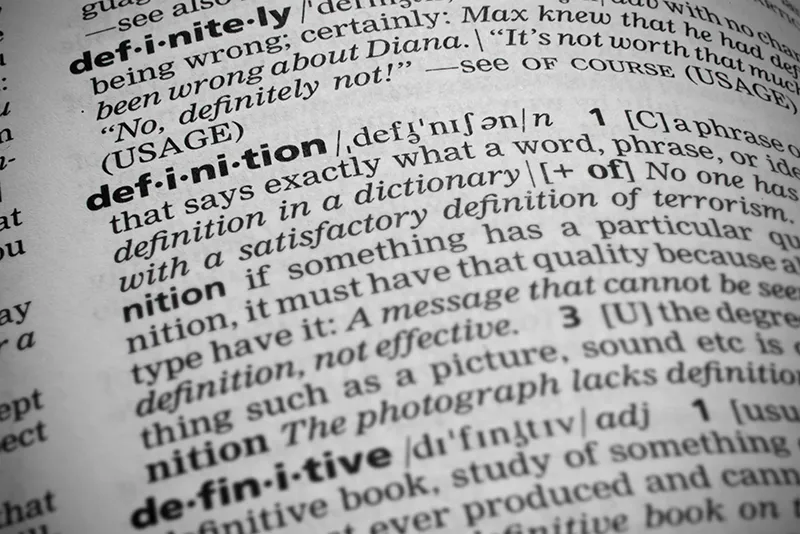
Personal injury law comes with its own vocabulary. Understanding these legal terms can help you follow what is happening in your case, communicate more effectively with your attorney, and make better decisions about your claim. This glossary covers the most important terms you are likely to encounter during the personal injury process, from filing a claim through settlement or trial. Also, see our personal injury FAQ information.
Each term is explained in plain language with references to related concepts throughout. Use the letter navigation below to jump directly to a specific term, or scroll through the full glossary.
A
Affidavit
A written statement of facts made voluntarily under oath and signed before a notary public or other authorized official. Affidavits are commonly used in personal injury cases to present evidence without requiring a witness to appear in person. They may include statements from witnesses, medical professionals, or the injured party. Because they are made under oath, knowingly providing false information in an affidavit constitutes perjury.
Appeal
A legal process where a higher court reviews the decision of a lower court. Either party in a personal injury case can file an appeal if they believe a legal error was made during the trial that affected the outcome. Appeals do not involve a new trial or new evidence - the appellate court reviews the existing trial record and legal arguments. The appeals process can add months or years to the timeline of a case.
Arbitration
A private dispute resolution process where a neutral third party (the arbitrator) hears evidence from both sides and makes a decision. Arbitration can be binding (the decision is final and enforceable) or non-binding (either party can reject the decision and proceed to trial). It is generally faster and less formal than a trial. Some insurance policies and contracts require arbitration instead of litigation. Unlike mediation, the arbitrator makes the decision rather than helping the parties negotiate.
Assumption of Risk
A legal defense where the defendant argues the plaintiff knowingly and voluntarily accepted the risks inherent in an activity. If successful, it can reduce or eliminate the defendant's liability. There are two types: express assumption of risk (signing a waiver before an activity) and implied assumption of risk (voluntarily participating in an activity with obvious dangers, such as a contact sport). This defense does not apply if the risk was hidden or if the defendant acted recklessly beyond the normal risks of the activity.
Attractive Nuisance
A legal doctrine that holds property owners liable for injuries to children caused by hazardous conditions on their property that are likely to attract children. Common examples include unfenced swimming pools, trampolines, abandoned vehicles, and construction sites. Under this doctrine, property owners have a heightened duty to protect children even if the children are trespassing, because children may not understand the dangers involved.
B
Bad Faith Insurance
When an insurance company unreasonably denies, delays, or undervalues a legitimate claim in violation of its duty to act in good faith toward its policyholders and claimants. Examples include refusing to investigate a claim, misrepresenting policy terms, making unreasonably low settlement offers, and using intimidation tactics. Policyholders who can prove bad faith may be entitled to damages beyond the original claim, including punitive damages in some states. See also: Good Faith.
Bench Trial
A trial where a judge, rather than a jury, decides the outcome. Both parties must agree to waive their right to a jury trial, or a bench trial may be required for certain types of cases. Bench trials are typically shorter and less formal than jury trials. They may be preferred in complex cases where technical legal issues might confuse a jury. See also: Jury Trial.
Bodily Injury
Physical harm to a person's body. In insurance contexts, bodily injury liability (BI) is the portion of an auto or liability insurance policy that covers injuries you cause to others. BI coverage pays for the other person's medical expenses, lost wages, pain and suffering, and legal costs up to the policy limits. The term is narrower than "personal injury," which also encompasses non-physical harm like emotional distress and reputational damage.
Breach of Duty
The second element of a negligence claim. A breach of duty occurs when a person fails to meet the standard of care - the level of caution a reasonably prudent person would exercise under similar circumstances. For example, a driver who runs a red light has breached their duty of care to other motorists and pedestrians. See also: Duty of Care, Negligence.
Burden of Proof
The obligation to prove the claims being made in a case. In personal injury lawsuits, the burden falls on the plaintiff, who must prove their case by a preponderance of the evidence - meaning it is more likely than not (greater than 50%) that the defendant's negligence caused the injury. This is a lower standard than the "beyond a reasonable doubt" standard used in criminal cases.
C
Cause of Action
The legal basis for a lawsuit - the specific set of facts and legal theory that gives a person the right to seek a judicial remedy. In personal injury, common causes of action include negligence, strict liability, intentional tort, and breach of warranty. A single incident can give rise to multiple causes of action.
Cease and Desist
A formal written notice demanding that a person or entity stop a specific activity (cease) and refrain from doing it again in the future (desist). While not a lawsuit itself, a cease and desist letter often serves as a precursor to legal action. In personal injury contexts, it may be used to stop ongoing harmful behavior, such as harassment by an insurance adjuster or continued defamatory statements.
Claims Adjuster (Insurance Adjuster)
A person employed by an insurance company to investigate and evaluate claims. The adjuster reviews the facts of the accident, assesses damages, and recommends a settlement amount. It is important to remember that the adjuster works for the insurance company, not for you - their goal is to resolve claims for as little as possible. Anything you say to an adjuster can be used to reduce or deny your claim. See also: Bad Faith Insurance.
Class Action Lawsuit
A type of lawsuit where a group of people with similar claims against the same defendant sue collectively as a "class." One or more named plaintiffs represent the entire group. Class actions are common in cases involving defective products, toxic exposure, or corporate misconduct affecting many people. The advantage is efficiency - thousands of similar claims are resolved in one proceeding. The disadvantage is that individual class members typically receive less than they might in an individual lawsuit. See also: Mass Tort.
Collateral Source Rule
A legal rule that prevents the defendant from reducing the damages they owe by pointing to compensation the plaintiff received from other sources, such as health insurance or disability benefits. Under this rule, the fact that your health insurance paid your medical bills does not reduce what the at-fault party owes you. Some states have modified or abolished this rule through tort reform legislation.
Comparative Negligence (Comparative Fault)
A legal system that assigns a percentage of fault to each party involved in an accident and reduces the plaintiff's compensation accordingly. There are two main types: pure comparative negligence (you can recover damages even if you are 99% at fault, reduced by your percentage) and modified comparative negligence (you are barred from recovery if your fault reaches 50% or 51%, depending on the state). The majority of states follow some form of comparative negligence. See also: Contributory Negligence.
Compensatory Damages
Money awarded to compensate the plaintiff for actual losses suffered as a result of the injury. Compensatory damages are divided into two categories: economic damages (also called special damages) covering quantifiable financial losses like medical bills, lost wages, and property damage; and non-economic damages (also called general damages) covering intangible losses like pain and suffering, emotional distress, and loss of enjoyment of life. See also: Punitive Damages.
Complaint
The formal legal document that initiates a lawsuit. Filed by the plaintiff (or their attorney), the complaint identifies the parties, describes the facts of the case, states the legal claims being made, and specifies the damages being sought. Once filed with the court, the complaint must be formally delivered ("served") to the defendant, who then has a set period of time to respond.
Contingency Fee
A fee arrangement where the attorney's payment is a percentage of the money recovered for the client. If the case is lost, the attorney receives no fee. The standard contingency fee in personal injury cases is 33.3% (one-third) of the settlement before a lawsuit is filed, increasing to approximately 40% if the case goes to litigation or trial. This arrangement makes legal representation accessible regardless of financial means. Case costs (filing fees, expert witnesses, medical records) are typically separate and reimbursed from the settlement. Learn more about personal injury lawyer costs →
Contributory Negligence
A harsh legal doctrine followed by only a few jurisdictions (Alabama, Maryland, North Carolina, Virginia, and Washington D.C.) that completely bars a plaintiff from recovering any compensation if they were even 1% at fault for the accident. Most states have replaced this rule with the more balanced comparative negligence system. Even in contributory negligence states, exceptions may apply, such as the "last clear chance" doctrine.
Counterclaim
A claim filed by the defendant against the plaintiff in the same lawsuit. In personal injury cases, a counterclaim typically argues that the plaintiff was actually at fault and caused the defendant's injuries. For example, in a two-car accident, the defendant might file a counterclaim alleging the plaintiff caused the collision. Counterclaims are decided alongside the original claim in the same proceeding.
D
Damages
Monetary compensation awarded to an injured party in a civil lawsuit. In personal injury, damages fall into three categories: economic damages (medical bills, lost wages, property damage), non-economic damages (pain and suffering, emotional distress, loss of enjoyment of life), and punitive damages (awarded in rare cases to punish egregious conduct). Some states impose caps on certain types of damages, particularly non-economic and punitive damages.
Damages Cap
A statutory limit on the amount of damages that can be awarded in certain types of cases. Many states cap non-economic damages (pain and suffering) in medical malpractice cases and cap punitive damages in all tort cases. For example, some states limit punitive damages to two or three times the amount of compensatory damages. Damages caps are a product of tort reform legislation and vary significantly by state.
Default Judgment
A ruling entered in favor of the plaintiff when the defendant fails to respond to the lawsuit within the required timeframe or fails to appear in court. A default judgment essentially gives the plaintiff a win by forfeit. The court may then schedule a hearing to determine the appropriate amount of damages. Default judgments can sometimes be overturned if the defendant can show good cause for their failure to respond.
Defendant
The person, company, or entity being sued in a civil lawsuit or accused of causing harm. In a personal injury case, the defendant is the party alleged to be at fault for the plaintiff's injuries. A single case may have multiple defendants if more than one party contributed to the injury. The defendant's insurance company typically provides legal representation and pays any settlement or judgment up to policy limits.
Defamation
A false statement presented as fact that damages a person's reputation. Defamation takes two forms: libel (written or published defamation) and slander (spoken defamation). To prove defamation, you must generally show the statement was false, communicated to a third party, and caused actual harm. Public figures face a higher burden and must also prove the statement was made with "actual malice" (knowledge it was false or reckless disregard for the truth). See also: Libel, Slander.
Demand Letter
A formal document sent by the plaintiff's attorney to the at-fault party's insurance company that outlines the facts of the case, details the injuries and treatment, documents all losses (medical bills, lost wages, pain and suffering), and states the total amount of compensation being demanded. The demand letter is a critical step in the claims process because it initiates settlement negotiations and establishes the plaintiff's position. It is sometimes part of a larger demand package that includes supporting evidence. Read our full guide to demand letters →
Deposition
Sworn, out-of-court testimony given under oath as part of the discovery process. A court reporter transcribes the testimony word-for-word. Depositions allow attorneys to gather facts, assess witness credibility, and lock in testimony that can be used at trial. Both parties, witnesses, and expert witnesses may be deposed. Depositions typically take place in an attorney's office and can last from one hour to several days depending on the complexity of the case.
Discovery
The pre-trial phase of a lawsuit where both sides exchange information and evidence relevant to the case. Discovery tools include interrogatories (written questions), requests for production of documents, depositions (sworn testimony), requests for admission, and independent medical examinations. Discovery ensures both sides have access to the same facts, which promotes fair settlements and prevents trial surprises.
Dram Shop Liability
A legal theory that holds bars, restaurants, and other establishments that serve alcohol liable for injuries caused by their intoxicated patrons. If a bar continues to serve a visibly intoxicated person who then causes a drunk driving accident, the bar may share liability for the resulting injuries. Most states have dram shop laws, though the specific requirements and limitations vary. Some states also impose social host liability on private individuals who serve alcohol to visibly intoxicated guests.
Duty of Care
The legal obligation to act with reasonable care to avoid causing harm to others. Duty of care is the first element that must be established in a negligence claim. The specific duty depends on the relationship between the parties: drivers owe a duty of care to everyone on the road; doctors owe a higher duty to their patients; property owners owe duties to visitors (the specific duty depends on whether the visitor is an invitee, licensee, or trespasser). See also: Breach of Duty, Standard of Care.
E
Economic Damages (Special Damages)
Quantifiable financial losses resulting from an injury. Economic damages include medical bills (past and future), lost wages, loss of future earning capacity, property damage, rehabilitation costs, and other out-of-pocket expenses. These damages are supported by documentation such as bills, receipts, pay stubs, and expert testimony. See also: Non-Economic Damages, Compensatory Damages.
Expert Witness
A person with specialized knowledge, training, or experience who is qualified to provide testimony on technical subjects beyond the understanding of the average person. In personal injury cases, common expert witnesses include medical doctors (testifying about injuries and prognosis), accident reconstructionists, economists (calculating future lost earnings), vocational rehabilitation experts, and biomechanical engineers. Expert witness fees are a case cost typically advanced by the attorney and reimbursed from the settlement.
F
First Party Claim
An insurance claim you file with your own insurance company under your own policy. Examples include filing a claim under your PIP (personal injury protection), MedPay, collision, or uninsured/underinsured motorist coverage. In a first party claim, you are dealing directly with the company you pay premiums to. See also: Third Party Claim.
G
Good Faith
The duty of an insurance company to deal honestly and fairly with its policyholders and claimants. Good faith requires insurers to promptly investigate claims, provide reasonable explanations for claim decisions, and offer fair settlement amounts. When an insurer violates this duty, it may be liable for bad faith insurance practices.
I
Independent Medical Examination (IME)
A medical examination requested by the insurance company or defendant, conducted by a doctor of their choosing, to assess the nature and extent of the plaintiff's injuries. Despite the name, IMEs are not truly "independent" - the examining doctor is paid by the opposing side and may minimize or dispute the severity of your injuries. You have the right to have your attorney present or to audio-record the examination in most jurisdictions. Your attorney can help you prepare for what to expect.
Indemnity (Indemnification)
A legal principle or contractual obligation where one party agrees to compensate another for certain losses or damages. In the insurance context, your policy is an indemnity contract - the insurer agrees to indemnify (compensate) you for covered losses. In personal injury law, indemnity also applies when one defendant has the right to recover from another defendant who was primarily responsible for the harm. For example, a retailer held liable for a defective product may seek indemnity from the manufacturer.
Informed Consent
The legal and ethical obligation of healthcare providers to ensure patients understand the risks, benefits, and alternatives of a proposed medical treatment before agreeing to it. Failure to obtain informed consent can form the basis of a medical malpractice claim. The key question is whether a reasonable patient, had they been properly informed, would have chosen a different course of treatment. Simply signing a consent form does not automatically shield a provider from liability if the disclosure was inadequate.
Interrogatories
Written questions sent by one party to the other during the discovery phase of a lawsuit. The receiving party must answer the questions in writing and under oath within a specified timeframe (usually 30 days). Interrogatories are used to gather basic facts about the case, identify witnesses, and understand the opposing party's claims or defenses. Most courts limit the number of interrogatories that can be served.
J
Joint and Several Liability
A legal doctrine that allows an injured plaintiff to collect the full amount of damages from any one of multiple defendants, regardless of that defendant's individual percentage of fault. For example, if two defendants are each 50% at fault but one is uninsured, the plaintiff can collect the entire judgment from the other. This protects plaintiffs from being unable to collect full compensation when one defendant lacks the resources to pay. Many states have modified this rule to limit its application.
Judgment
The final, official decision of a court that resolves a lawsuit and determines the rights and obligations of the parties. A judgment is the court's formal order based on the verdict (in a jury trial) or the judge's findings (in a bench trial). While a verdict is the jury's decision on the facts, the judgment is the court's legal ruling that makes the verdict enforceable. A judgment may also result from a settlement, default judgment, or summary judgment. Once entered, a judgment can be enforced through garnishment, liens, or other collection methods.
Jury Trial
A trial where a group of citizens (the jury) hears the evidence and decides the outcome, including whether the defendant is liable and the amount of damages. In most personal injury cases, either party has the right to request a jury trial. Juries typically consist of 6–12 members selected through a process called voir dire. Jury trials tend to be longer and more expensive than bench trials but may result in higher damage awards, particularly for pain and suffering. See also: Bench Trial.
L
Letter of Protection (LOP)
A written agreement between your attorney and a healthcare provider guaranteeing that the provider will be paid from your settlement proceeds. An LOP allows you to receive medical treatment without paying out of pocket while your case is pending. The provider agrees to defer billing in exchange for a guaranteed payment when the case resolves. LOPs are common in personal injury cases where the injured person has limited health insurance or high out-of-pocket costs.
Liability
Legal responsibility for one's actions or omissions that cause harm to another person. In personal injury law, establishing liability means proving the defendant owed a duty, breached that duty, and caused the plaintiff's injuries. Liability can be based on negligence, strict liability, or intentional misconduct. Multiple parties can share liability for a single accident.
Libel
A form of defamation that involves false statements published in a permanent form, such as written articles, social media posts, emails, or broadcasts. Libel is distinguished from slander, which involves spoken false statements. Because written statements are more permanent and reach wider audiences, libel is generally considered more harmful than slander, and in many states damages are presumed without requiring proof of specific financial loss.
Lien
A legal claim against your settlement proceeds by a party that is owed money related to your injury. Common lien holders include health insurance companies, Medicare/Medicaid, hospitals, and other medical providers who treated your injuries. Liens must be resolved before settlement funds are distributed to you. Your attorney negotiates liens on your behalf and can often reduce the amounts owed, which increases your net recovery. See also: Medical Lien, Subrogation.
Loss of Consortium
A legal claim brought by the spouse (and in some states, children or parents) of an injured person, seeking compensation for the loss of companionship, affection, intimacy, moral support, and household services resulting from the injury. Loss of consortium is a separate claim filed alongside the primary personal injury lawsuit. Not all states recognize this claim, and eligible family members vary by jurisdiction.
M
Malpractice
Professional negligence - when a professional (most commonly a doctor, lawyer, or accountant) fails to perform their duties according to the accepted standard of care in their field, resulting in harm to a client or patient. Medical malpractice is the most common type in personal injury law and includes surgical errors, misdiagnosis, medication errors, birth injuries, and failure to obtain informed consent. Malpractice cases typically require expert witness testimony.
Mass Tort
A type of civil action where many plaintiffs bring individual claims against one or a few defendants for injuries caused by the same product or action. Unlike a class action, each plaintiff in a mass tort maintains their own individual case and receives a verdict or settlement based on their specific injuries. Mass torts are common in pharmaceutical drug cases, medical device failures, and toxic exposure claims. Cases are often consolidated in a multidistrict litigation (MDL) for efficiency.
Maximum Medical Improvement (MMI)
The point at which your medical condition has stabilized and is unlikely to improve significantly with further treatment. Reaching MMI does not mean you are fully recovered - it means your condition is as good as it is expected to get. MMI is a critical milestone in a personal injury case because it allows your attorney to accurately calculate the full value of your damages, including any permanent impairment. Settling a case before reaching MMI risks leaving money on the table.
Mediation
A voluntary, structured negotiation session where a neutral third party (the mediator) helps both sides work toward a settlement. The mediator does not make a decision or impose a resolution - they facilitate communication and help identify common ground. Mediation is less formal and less expensive than trial, and a high percentage of mediated cases reach resolution. Many courts require mediation before a case can proceed to trial. If no agreement is reached, the parties retain the right to go to trial. See also: Arbitration.
Medical Lien
A legal claim placed on your personal injury settlement by a healthcare provider, health insurer, or government program (Medicare, Medicaid) to recover the cost of medical treatment related to your injury. Liens must be satisfied from your settlement before you receive your share. Your attorney can often negotiate liens down, sometimes significantly, to maximize your net recovery. Common lien holders include hospitals, health insurance companies, Medicare, Medicaid, and providers working under a letter of protection.
Mitigation of Damages
The legal duty of an injured person to take reasonable steps to minimize their losses after an accident. This means seeking prompt medical treatment, following doctor's orders, and not unnecessarily worsening your condition. If you fail to mitigate your damages (for example, by refusing recommended treatment), the defendant may argue that you are responsible for the additional harm and your compensation should be reduced accordingly. You are not required to undergo risky or extreme treatments.
N
Negligence
The legal foundation of most personal injury cases. Negligence is the failure to exercise the level of care that a reasonably prudent person would under similar circumstances, resulting in harm to another. To prove negligence, the plaintiff must establish four elements: duty of care, breach of duty, causation, and damages. See also: Comparative Negligence, Contributory Negligence, Negligence Per Se.
Negligence Per Se
A legal doctrine where a defendant is automatically considered negligent because they violated a statute or regulation designed to protect the public. The plaintiff does not need to prove the defendant failed to act as a reasonable person - the violation itself establishes breach of duty. Common examples include running a red light, driving under the influence, violating building codes, and selling alcohol to a minor. The plaintiff must still prove that the violation caused their injury.
No-Fault Insurance
An auto insurance system used in some states where each driver's own insurance pays for their medical expenses and lost wages after an accident, regardless of who was at fault. No-fault states include Florida, Michigan, New York, New Jersey, and several others. In exchange for guaranteed benefits, your ability to sue the at-fault driver is limited - you can generally only file a lawsuit if your injuries meet a "serious injury" threshold defined by state law. See also: Personal Injury Protection (PIP).
Non-Economic Damages (General Damages)
Compensation for intangible losses that do not have a specific dollar amount. Non-economic damages include pain and suffering, emotional distress, loss of enjoyment of life, loss of consortium, disfigurement, and scarring. Because these losses are subjective, they are often the most disputed part of a personal injury case. Some states cap non-economic damages, particularly in medical malpractice cases. See also: Economic Damages, Pain and Suffering.
Nuclear Verdict
An informal term for an exceptionally large jury verdict, typically $10 million or more. Nuclear verdicts have become more common in personal injury and wrongful death cases, particularly those involving trucking accidents, medical malpractice, and corporate negligence. The term reflects the insurance industry's concern about the rising size of jury awards. Factors contributing to nuclear verdicts include strong evidence of defendant wrongdoing, severe or catastrophic injuries, and effective plaintiff trial strategy. Browse our latest verdict news for examples of significant verdicts.
P
Pain and Suffering
A category of non-economic damages that compensates for the physical pain and emotional anguish caused by an injury. Physical pain and suffering includes the actual pain from the injury and ongoing discomfort during recovery. Mental pain and suffering includes anxiety, depression, PTSD, insomnia, fear, and the overall reduction in quality of life. Pain and suffering is typically calculated using a multiplier method (multiplying economic damages by a factor of 1.5–5) or a per diem method (a daily dollar amount for each day of pain). It is often the largest component of a settlement. For more detail, see our Pain and Suffering FAQ section.
Personal Injury Protection (PIP)
A type of auto insurance coverage that pays for your own medical expenses and lost wages after a car accident, regardless of who was at fault. PIP is required in no-fault states and optional in others. Coverage typically includes medical and surgical expenses, rehabilitation, lost income (usually up to a percentage), funeral expenses, and sometimes essential services like childcare. PIP coverage limits vary by state and policy. See also: No-Fault Insurance.
Plaintiff
The person or party who initiates a lawsuit by filing a complaint against the defendant. In a personal injury case, the plaintiff is the injured person seeking compensation. In wrongful death cases, the plaintiff is typically a surviving family member or the estate's personal representative filing on behalf of the deceased.
Policy Limit
The maximum amount an insurance company will pay under a specific insurance policy. If your damages exceed the at-fault party's policy limits, additional recovery options include your own underinsured motorist coverage, the defendant's personal assets, umbrella insurance policies, or identifying additional liable parties. Understanding all available policy limits is a critical part of evaluating a personal injury claim. See also: Umbrella Insurance.
Premises Liability
The area of law that holds property owners and occupiers responsible for injuries that occur on their property due to unsafe conditions. Common premises liability claims include slip and fall accidents, inadequate security, dog bites, swimming pool accidents, and injuries from poorly maintained structures. The property owner's duty depends on the visitor's status: invitees (customers) are owed the highest duty of care; licensees (social guests) are owed a moderate duty; and trespassers are generally owed the least duty, except for children under the attractive nuisance doctrine.
Preponderance of the Evidence
The standard of proof in civil cases, including personal injury lawsuits. It requires the plaintiff to show that their version of events is "more likely than not" true - essentially, greater than a 50% probability. This is a significantly lower standard than "beyond a reasonable doubt" used in criminal cases. The plaintiff carries the burden of proof and must present enough evidence to tip the scales in their favor.
Product Liability
The area of law that holds manufacturers, distributors, and sellers responsible for injuries caused by defective or dangerous products. Product liability claims can be based on: design defects (the product is inherently dangerous), manufacturing defects (an error occurred during production), or failure to warn (inadequate instructions or safety warnings). Many product liability claims are based on strict liability, meaning the plaintiff does not need to prove the manufacturer was negligent - only that the product was defective and caused injury.
Proximate Cause
The legal concept that connects the defendant's negligent action to the plaintiff's injury. Proximate cause asks: was the injury a foreseeable result of the defendant's conduct? It is the third element of a negligence claim. Both "cause in fact" (the injury would not have occurred "but for" the defendant's actions) and foreseeability (the type of harm was a predictable consequence) must be established. Proximate cause is often the most contested element in personal injury cases.
Punitive Damages
Additional damages awarded beyond compensatory damages to punish a defendant for especially reckless, malicious, or fraudulent conduct and to deter similar behavior in the future. Punitive damages are not available in every case - they require proof of conduct significantly worse than ordinary negligence. Many states cap punitive damages at a multiple of compensatory damages (often 2x–3x). Unlike compensatory damages for physical injuries, punitive damages are generally taxable as income.
R
Release of Liability
A legal document you sign when accepting a settlement that gives up (releases) your right to pursue any further legal claims related to the injury against the defendant. Once signed, a release is generally final and irreversible. This is why it is critical to ensure you have reached maximum medical improvement and fully understand the long-term impact of your injuries before signing. Never sign a release without having an attorney review it.
Respondeat Superior
A Latin term meaning "let the master answer." It is a form of vicarious liability that holds employers legally responsible for the negligent acts of their employees committed within the scope of employment. For example, if a delivery driver causes an accident while making deliveries, the employer can be held liable. The doctrine does not apply to independent contractors or to employees acting outside the scope of their job duties.
Retainer Fee
An upfront payment made to an attorney to secure their services. The retainer is deposited into a trust account and the attorney bills against it as work is performed. Retainer fees are common in areas like criminal defense, family law, and business law. In personal injury cases, retainer fees are rare because most personal injury attorneys work on a contingency fee basis, meaning you pay nothing unless you recover compensation.
S
Settlement
An agreement between the plaintiff and defendant (or their insurance company) to resolve a personal injury claim without going to trial. The plaintiff agrees to accept a specified amount of money in exchange for signing a release of liability. Settlements can occur at any stage of the process - during insurance negotiations, after filing a lawsuit, during discovery, at mediation, or even during trial. The vast majority of personal injury cases end in settlement rather than a verdict.
Slander
A form of defamation involving false spoken statements that damage a person's reputation. Unlike libel (written defamation), slander is generally considered more difficult to prove because spoken words are transient and harder to document. In most states, the plaintiff must prove actual financial damages unless the slander falls into a "per se" category (false accusations of a crime, a loathsome disease, professional incompetence, or sexual misconduct).
Sovereign Immunity
A legal doctrine that generally prevents the government from being sued without its consent. While governments have historically been shielded from personal injury lawsuits, most states and the federal government have enacted "tort claims acts" that waive sovereign immunity under specific conditions. Claims against government entities typically have shorter deadlines (sometimes as few as 60–180 days to file a notice of claim), lower damages caps, and special procedural requirements. If a government employee caused your injury, consult an attorney immediately to avoid missing these accelerated deadlines.
Spoliation of Evidence
The intentional or negligent destruction, alteration, or concealment of evidence relevant to a legal case. When spoliation occurs, the court may impose sanctions on the responsible party, including an instruction to the jury to assume the destroyed evidence was unfavorable to that party. This is why it is important never to delete social media posts, text messages, or other documents after an accident - and to promptly request that the opposing party preserve relevant evidence.
Standard of Care
The degree of care, caution, and prudence that a reasonable person would exercise under similar circumstances. In negligence cases, the defendant's conduct is measured against this standard. In medical malpractice, the standard of care is the level of treatment that a reasonably competent healthcare provider in the same specialty would provide. Deviating from the standard of care is the basis for a breach of duty claim.
Statute of Limitations
The legal deadline for filing a lawsuit. Each state sets its own statute of limitations, which varies by the type of case. For personal injury, the deadline ranges from one to six years, with two to three years being the most common. The clock typically starts on the date of injury. Exceptions exist for minors, cases involving delayed discovery of injuries, and claims against government entities. Missing the statute of limitations almost always permanently bars your right to sue. See also: Statute of Repose.
Statute of Repose
A fixed deadline for filing a lawsuit that begins from a specific event (such as the date a product was sold or a building was completed), regardless of when the injury occurred or was discovered. Unlike a statute of limitations, which starts when the injury happens, a statute of repose can expire before an injury even occurs. Statutes of repose are most common in product liability and construction defect cases and represent an absolute outer time limit for filing suit.
Strict Liability
Legal responsibility for harm without the need to prove negligence or fault. Under strict liability, the plaintiff only needs to show that the product was defective and caused their injury - not that the manufacturer acted carelessly. Strict liability is most commonly applied in product liability cases and certain animal-related injuries (such as dog bites in strict liability states). The rationale is that manufacturers are in the best position to prevent defects and should bear the cost when they fail.
Structured Settlement
A settlement arrangement where compensation is paid in scheduled installments over time rather than as a single lump sum. Payments are typically funded through an annuity and can be customized (monthly, annually, or with larger payments at specific intervals). Advantages include tax-free growth, guaranteed income, and protection against spending the money too quickly. Structured settlements are most common in cases involving large awards, minors, or individuals who will need long-term care.
Subpoena
A legal order requiring a person to appear in court, give testimony at a deposition, or produce documents. There are two types: a subpoena ad testificandum (requiring testimony) and a subpoena duces tecum (requiring documents or records). Failure to comply with a subpoena can result in contempt of court penalties. In personal injury cases, subpoenas are commonly used to obtain medical records, employment records, and testimony from witnesses or experts.
Subrogation
The legal right of an insurance company to pursue the at-fault party to recover money it has already paid on a claim. For example, if your health insurance pays $50,000 for treatment of injuries caused by another driver, your health insurer has a subrogation right to recover that $50,000 from the at-fault driver's insurance. Subrogation claims are typically resolved as part of the settlement process. Your attorney can negotiate subrogation amounts to reduce what is owed and increase your net recovery. See also: Lien. Read our full guide to subrogation →
Summary Judgment
A court ruling that resolves a case (or specific issues within a case) without a full trial. Either party can file a motion for summary judgment arguing that there are no disputed facts requiring a trial and that they are entitled to win as a matter of law. If granted, the case ends without the jury hearing it. Summary judgment motions are common in personal injury defense and require the opposing party to demonstrate that genuine factual disputes exist that should be decided by a jury.
T
Third Party Claim
An insurance claim filed against another person's insurance policy. In a car accident, a third party claim is filed against the at-fault driver's liability insurance. This is the opposite of a first party claim, which is filed with your own insurer. In workplace injuries, a third party claim refers to a personal injury lawsuit against someone other than your employer (such as a subcontractor or equipment manufacturer) that can be pursued alongside a workers' compensation claim.
Tort
A civil wrong that causes someone to suffer harm or loss, creating legal liability for the person who commits the act. Personal injury law is a branch of tort law. The three main categories are: negligence torts (failure to exercise reasonable care), intentional torts (deliberate harmful acts like assault or battery), and strict liability torts (liability without proof of negligence, as in defective product cases). A tort claim is a civil action - separate from any criminal charges that may arise from the same incident.
Tort Reform
Legislative changes designed to limit the ability of injured people to file civil lawsuits or to cap the amount of damages they can recover. Common tort reform measures include damages caps (particularly on non-economic and punitive damages), shorter statutes of limitations, restrictions on class action lawsuits, and modifications to the collateral source rule. The debate over tort reform is ongoing, with proponents arguing it reduces frivolous lawsuits and opponents arguing it limits access to justice for legitimately injured people.
Toxic Tort
A personal injury claim arising from exposure to a harmful substance such as chemicals, pesticides, pharmaceutical drugs, contaminated water, asbestos, lead paint, or industrial pollutants. Toxic tort cases can be brought as individual lawsuits, class actions, or mass torts. These cases are often complex because they require scientific and medical evidence linking the exposure to the injury, the health effects may take years or decades to appear, and multiple parties (manufacturers, employers, property owners, government agencies) may share responsibility. Common toxic tort claims involve asbestos-related mesothelioma, contaminated drinking water (such as Camp Lejeune and PFAS/forever chemicals cases), pharmaceutical side effects, and workplace chemical exposure.
U
Umbrella Insurance
An additional liability insurance policy that provides coverage beyond the limits of your underlying auto or homeowners insurance. For example, if you have $300,000 in auto liability coverage and a $1 million umbrella policy, you have up to $1.3 million in total liability protection. For injury victims, the at-fault party's umbrella policy can be a critical source of additional recovery when damages exceed their primary policy limits.
Underinsured Motorist Coverage (UIM)
Auto insurance coverage that protects you when the at-fault driver has insurance but their policy limits are insufficient to cover your damages. For example, if your damages total $200,000 but the at-fault driver only has $50,000 in coverage, your UIM policy covers the gap (up to your own policy limits). UIM is required in some states and optional in others. It is one of the most important coverages you can carry on your own auto policy. See also: Uninsured Motorist Coverage.
Uninsured Motorist Coverage (UM)
Auto insurance coverage that protects you when you are injured by a driver who has no insurance at all. UM coverage pays for your medical expenses, lost wages, and pain and suffering up to your policy limits. It also typically applies in hit-and-run accidents where the at-fault driver cannot be identified. UM is required in many states and is filed as a first party claim with your own insurance company.
V
Verdict
The formal decision made by a judge or jury at the conclusion of a trial. In a personal injury case, the verdict determines whether the defendant is liable and, if so, the amount of damages to be awarded. A verdict can be appealed by either party. Verdicts are public record and are often reported in legal publications and media. Browse our latest verdict and settlement news for recent examples.
Jury Verdict Reporter
A subscription-based publication or service that collects and publishes jury verdict and settlement results for attorneys and legal professionals. Most jury verdict reporters are regional, covering a single state or metropolitan area, and require paid subscriptions to access their databases. They are commonly used by attorneys to research comparable case outcomes for valuation and trial preparation. Major Verdict is a jury verdict reporter that takes a different approach: your profile and verdicts belong to you, are publicly visible to potential clients, and go with you if you change firms.
Vicarious Liability
A legal doctrine that holds one party responsible for the negligent actions of another based on their relationship. The most common form is respondeat superior (employer liability for employee actions). Other examples include parents' liability for their minor children's actions, vehicle owners' liability for permissive drivers, and franchisor liability for franchisee conduct in some cases. Vicarious liability is significant in personal injury cases because it often means a party with deeper pockets (like an employer or corporation) can be held responsible.
Voir Dire
The jury selection process at the beginning of a trial. During voir dire, attorneys for both sides, and sometimes the judge, question prospective jurors to identify potential biases and select a fair and impartial jury. Attorneys can remove prospective jurors "for cause" (demonstrated bias) or through a limited number of "peremptory challenges" (removal without stating a reason, except that it cannot be based on race, gender, or ethnicity). Voir dire is a critical phase of trial strategy.
W
Wrongful Death
A legal claim filed when a person dies as a result of another party's negligence, recklessness, or intentional act. Wrongful death lawsuits are brought by surviving family members (typically a spouse, children, or parents) or the personal representative of the deceased's estate. Recoverable damages include funeral and burial expenses, the deceased's lost future income and benefits, loss of companionship and guidance, and the emotional suffering of surviving family members. Each state has specific rules about who may file and what damages are available. For more detail, see our wrongful death FAQ.
Need Help Understanding Your Case?
Browse our directory of experienced personal injury lawyers who can explain how these terms apply to your specific situation.
Find Your State Specific Personal Injury Information
Personal injury law isn't the same everywhere.
Rules, deadlines, damage caps, and procedures vary by state. That's why we organize state-specific resources to help you understand how the process works where your case actually lives.
Use this section to:
- Learn your state's deadlines and legal framework
- Explore local personal injury resources
- Find experienced attorneys licensed in your state
Whether you're just learning or actively looking for legal help, starting with the right state-specific information puts you in control. Click your state below.
Search Legal Terms
Personal Injury Resources
Member Search
Latest Featured Members
-
 VIEW PROFILE
Featured Member
Connor Plant - CO
-
 VIEW PROFILE
Featured Member
Jason Alleman - CO
-
 VIEW PROFILE
Featured Member
Chad Hemmat - CO
-
 VIEW PROFILE
Featured Member
Cameron Hunter - CO
-
 VIEW PROFILE
Featured Member
Jerome Howard - AL
-
 VIEW PROFILE
Featured Member
Helen Cho - AZ
-
 VIEW PROFILE
Featured Member
Karen Carter - CT
-
 VIEW PROFILE
Featured Member
Nicholas Thomas - CT
-
 VIEW PROFILE
Featured Member
Alice Chang - FL
-
 VIEW PROFILE
Featured Member
Sanjay Shah - GA
-
 VIEW PROFILE
Featured Member
Edward Clark - HI
-
 VIEW PROFILE
Featured Member
Siddharth Mukherjee - HI
-
 VIEW PROFILE
Featured Member
Raymond Choi - ID
-
 VIEW PROFILE
Featured Member
Ryan Campbell - IN
-
 VIEW PROFILE
Featured Member
David Russell - IA
-
 VIEW PROFILE
Featured Member
Danielle Clark - KY
-
 VIEW PROFILE
Featured Member
Andrea Tran - LA
-
 VIEW PROFILE
Featured Member
Jose Mendoza - ME
-
 VIEW PROFILE
Featured Member
Samantha Bennett - MD
-
 VIEW PROFILE
Featured Member
Curtis Davis - MA
-
 VIEW PROFILE
Featured Member
Deepak Desai - MS
-
 VIEW PROFILE
Featured Member
Clarence Bennett - MT
-
 VIEW PROFILE
Featured Member
Nisha Malhotra - NV
-
 VIEW PROFILE
Featured Member
Jacob Peterson - NV
-
 VIEW PROFILE
Featured Member
Katherine Phillips - NH
-
 VIEW PROFILE
Featured Member
Dennis Burke - NJ
-
 VIEW PROFILE
Featured Member
Emma Coleman - NJ
-
 VIEW PROFILE
Featured Member
Dennis Burns - NM
-
 VIEW PROFILE
Featured Member
Denise Jefferson - NY
-
 VIEW PROFILE
Featured Member
Daniel Watson - NY
-
 VIEW PROFILE
Featured Member
Sandra Scott - NC
-
 VIEW PROFILE
Featured Member
Jose Diaz - NC
-
 VIEW PROFILE
Featured Member
Amy Williams - ND
-
 VIEW PROFILE
Featured Member
Sunita Bose - OR
-
 VIEW PROFILE
Featured Member
Charles Phillips - OR
-
 VIEW PROFILE
Featured Member
Stephen Mitchell - PA
-
 VIEW PROFILE
Featured Member
Ruben Garcia - RI
-
 VIEW PROFILE
Featured Member
Jack Warren - SC
-
 VIEW PROFILE
Featured Member
Gerald Hall - SD
-
 VIEW PROFILE
Featured Member
Keith Wood - TX
-
 VIEW PROFILE
Featured Member
Derek Lu - UT
-
 VIEW PROFILE
Featured Member
Luis Sandoval - UT
-
 VIEW PROFILE
Featured Member
Sophia Lewis - VT
-
 VIEW PROFILE
Featured Member
Ann Cooper - VA
-
 VIEW PROFILE
Featured Member
Raymond Warren - WA
-
 VIEW PROFILE
Featured Member
Joseph Crawford - WI
-
 VIEW PROFILE
Featured Member
Gregory Peterson - WY
-
 VIEW PROFILE
Featured Member
Victoria King - TN, IA
-
 VIEW PROFILE
Featured Member
Rani Kapoor - AR
-
 VIEW PROFILE
Featured Member
Ronald Carter - AL
 Featured Major Verdict Members

-
VIEW PROFILE
Katherine Phillips
Breitenberg-Schumm
-
 VIEW PROFILE
Dennis He
Anderson Ltd
-
 VIEW PROFILE
Kenneth Coleman
Cummerata, Fisher and Veum
-
 VIEW PROFILE
Yvonne Scott
Hickle Ltd
-
 VIEW PROFILE
Olivia Miller
Jenkins, Schiller and Langosh
-
 VIEW PROFILE
Catherine Crawford
Thiel-Ullrich
-
VIEW PROFILE
Dennis Burke
Brekke, Herzog and Macejkovic
-
 VIEW PROFILE
Deepak Menon
O'Kon-Cremin
-
VIEW PROFILE
Connor Plant
Anderson Hemmat
-
VIEW PROFILE
Ann Cooper
Senger Group
-
 VIEW PROFILE
Swati Iyer
Willms Ltd
-
 VIEW PROFILE
Jack Reed
Bayer LLC
-
VIEW PROFILE
Amy Williams
Boyer, Corwin and Grimes
-
VIEW PROFILE
Luis Sandoval
Reilly, Windler and Parker
-
 VIEW PROFILE
Nancy Baker
Kunze, Moore and Davis
-
 VIEW PROFILE
Frank Lewis
Adams Group
-
VIEW PROFILE
Edward Clark
Fay, Volkman and Jenkins
-
VIEW PROFILE
Dennis Burns
Zieme PLC
-
 VIEW PROFILE
Jerry Peterson
Feil, Barton and Morissette
-
VIEW PROFILE
Raymond Warren
Mills-Heidenreich
-
VIEW PROFILE
Derek Lu
Jaskolski, Kilback and Littel
-
 VIEW PROFILE
Tyler Ross
Rosenbaum-Gorczany
-
 VIEW PROFILE
Raul Torres
Botsford Ltd
-
VIEW PROFILE
David Russell
Parker LLC
-
 VIEW PROFILE
Joshua Sanders
Hoeger-Keebler
-
VIEW PROFILE
Andrea Tran
Rippin LLC
-
VIEW PROFILE
Nisha Malhotra
Cole, Langosh and Mohr
-
 VIEW PROFILE
Brian Wright
Blick, Brakus and Spinka
-
 VIEW PROFILE
Victor Fan
Bogan-Pagac
-
 VIEW PROFILE
Tyler Brown
Durgan-Luettgen
-
VIEW PROFILE
Siddharth Mukherjee
Hills, Torp and Pagac
-
 VIEW PROFILE
Olivia Warren
Price, Legros and Donnelly
-
 VIEW PROFILE
Jennifer Adams
Stehr Inc
-
 VIEW PROFILE
Jason Bennett
Armstrong-Gorczany
-
 VIEW PROFILE
Keith Wright
Predovic, Rice and Macejkovic
-
VIEW PROFILE
Sandra Scott
Ritchie, Nienow and Emmerich
-
 VIEW PROFILE
Kabir Pillai
Turcotte, D'Amore and Wilderman
-
 VIEW PROFILE
Diana Zhang
Turner-Barton
-
VIEW PROFILE
Alice Chang
Schuster, Koch and Schneider
-
 VIEW PROFILE
Patrick Walker
Rowe, Kub and Ryan
-
 VIEW PROFILE
Terry Morgan
Schmitt Group
-
 VIEW PROFILE
Austin Campbell
White, Hyatt and Abernathy
-
 VIEW PROFILE
Linda Chen
Ebert, Kuhic and Lubowitz
-
 VIEW PROFILE
Ronald Miller
Marvin-Haag
-
VIEW PROFILE
Amanda Gray
Ward-Rice
-
VIEW PROFILE
Jose Mendoza
Hilpert PLC
-
 VIEW PROFILE
Nicholas Richardson
Daniel, McKenzie and Price
-
VIEW PROFILE
Cameron Hunter
Fiedler Trial Lawyers
-
 VIEW PROFILE
Ana Sandoval
Denesik LLC
-
 VIEW PROFILE
Timothy Ma
McKenzie, Harber and Waelchi